KC-4731

CHOK1-cyno-BAFFR Cell Line

×
Please enable JavaScript in your browser to complete this form.
61054
Home » CHOK1-cyno-BAFFR Cell Line

Background of CHOK1-cyno-BAFFR Cell Line

B cell-activating factor (BAFF) enhances B-cell survival in vitro and is a regulator of the peripheral B-cell population. Overexpression of Baff in mice results in mature B-cell hyperplasia and symptoms of systemic lupus erythematosus (SLE). Also, some SLE patients have increased levels of BAFF in serum. Therefore, it has been proposed that abnormally high levels of BAFF may contribute to the pathogenesis of autoimmune diseases by enhancing the survival of autoreactive B cells. The protein encoded by this gene is a receptor for BAFF and is a type III transmembrane protein containing a single extracellular cysteine-rich domain. It is thought that this receptor is the principal receptor required for BAFF-mediated mature B-cell survival.

Specifications

Catalog NumberKC-4731
Cell Line NameCHOK1-cyno-BAFFR Cell Line
NCBI/UniProt Accession NumberNM_052945.3
Clone Number5-4#
Host Cell LineCHOK1
DescriptionStable CHOK1 cell line expressing exogenous cyno-BAFFR gene
QuantityTwo vials of frozen cells (≥2-106/vial)
StabilityStable in culture over a minimum of 10 passages
ApplicationDrug screening and biological assays
Freezing Medium70% RPMI1640 + 20% FBS + 10% DMSO
Propagation MediumRPMI1640 + 10% FBS + 10μg/mL Puromycin
Selection MarkerPuromycin
MorphologyEpithelial
SubcultureSplit saturated culture 1:4-1:8 every 2-3 days; seed out at about 1-3 × 10⁵ cells/mL
Incubation37 °C with 5% CO2
StorageLiquid nitrogen immediately upon receiving
Doubling TimeApproximately 30 hours
Mycoplasma StatusNegative

Cell Line Generation

CHOK1-cyno-BAFFR cell line was generated using a lentiviral vector expressing the cyno-BAFFR sequence.

Characterization

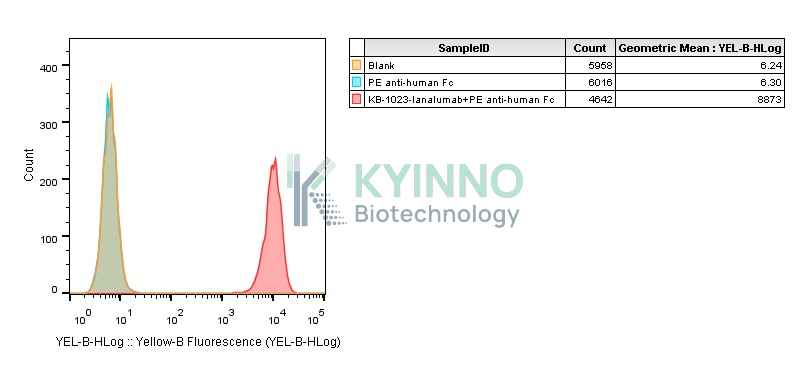
Figure 1: Characterization of cyno-BAFFR overexpression in CHOK1-cyno-BAFFR cell line stable clone using FACS.

Figure 2: Characterization of cyno-BAFFR overexpressing in CHOK1-cyno-BAFFR stable clone using PCR sequencing.

Cell Resuscitation

  1. Prewarm culture medium (RPMI1640 supplemented with 10% FBS and 10μg/mL Puromycin)in a 37°C water bath.
  2. Thaw the frozen vial in a 37°C water bath for 1-2 minutes.
  3. Transfer the vial into biosafety cabinet, and wipe the surface with 70% ethanol.
  4. Unscrew the top of the vial and transfer the cell suspension gently into a sterile centrifuge tube containing 9.0mL complete culture medium.
  5. Spin at ~ 125 × g for 5-7 minutes at room temperature, and discard the supernatant without disturbing the pellet.
  6. Resuspend cell pellet with the appropriate volume of complete medium and transfer the cell suspension into a T25 culture flask.
  7. Incubate the flask at 37°C, 5% CO2 incubator.
  8. Split saturated culture 1:4-1:8 every 2-3 days; seed out at about 1-3 × 10⁵ cells/mL.

Cell Freezing

  1. Prepare the freezing medium (70% RPMI1640 + 20% FBS + 10% DMSO) fresh immediately before use.
  2. Keep the freezing medium on ice and label cryovials.
  3. Transfer cells to a sterile, conical centrifuge tube, and count the cells.
  4. Centrifuge the cells at 250×g for 5 minutes at room temperature and carefully aspirate off the medium.
  5. Resuspend the cells at a density of at least 3×10⁶ cells/mL in chilled freezing medium.
  6. Aliquot 1 mL of the cell suspension into each cryovial.
  7. Freeze cells in the CoolCell freezing container overnight in a -80°C freezer.
  8. Transfer vials to liquid nitrogen for long-term storage.

References

  1. Mihalcik SA, Huddleston PM 3rd, Wu X, Jelinek DF. The structure of the TNFRSF13C promoter enables differential expression of BAFF-R during B cell ontogeny and terminal differentiation. J Immunol. 2010 Jul 15;185(2):1045-54. doi: 10.4049/jimmunol.1001120. Epub 2010 Jun 16. Erratum in: J Immunol. 2010 Nov 15;185(10):6384. PMID: 20554963; PMCID: PMC3780588.
  2. Min YN, Wang CY, Li XX, Hou Y, Qiu JH, Ma J, Shao LL, Zhang X, Wang YW, Peng J, Hou M, Shi Y. Participation of B-cell-activating factor receptors in the pathogenesis of immune thrombocytopenia. J Thromb Haemost. 2016 Mar;14(3):559-71. doi: 10.1111/jth.13246. Epub 2016 Feb 17. PMID: 26749059.
Please enable JavaScript in your browser to complete this form.