KC-4993

COS7-CALCR-RAMP3 Cell Line

×
Please enable JavaScript in your browser to complete this form.
59181
Home » COS7-CALCR-RAMP3 Cell Line

Background of COS7-CALCR-RAMP3 Cell Line

CALCR (Calcitonin Receptor) is a Protein Coding gene.This gene encodes a high affinity receptor for the peptide hormone calcitonin and belongs to a subfamily of seven transmembrane-spanning G protein-coupled receptors. The encoded protein is involved in maintaining calcium homeostasis and in regulating osteoclast-mediated bone resorption. Polymorphisms in this gene have been associated with variations in bone mineral density and onset of osteoporosis. Alternate splicing results in multiple transcript variants. RAMP3 (Receptor Activity Modifying Protein 3) is a Protein Coding gene. The protein encoded by this gene is a member of the RAMP family of single-transmembrane-domain proteins, called receptor (calcitonin) activity modifying proteins (RAMPs). RAMPs are type I transmembrane proteins with an extracellular N terminus and a cytoplasmic C terminus. RAMPs are required to transport calcitonin-receptor-like receptor (CRLR) to the plasma membrane. CRLR, a receptor with seven transmembrane domains, can function as either a calcitonin-gene-related peptide (CGRP) receptor or an adrenomedullin receptor, depending on which members of the RAMP family are expressed. In the presence of this (RAMP3) protein, CRLR functions as an adrenomedullin receptor.

Specifications

Catalog NumberKC-4993
Cell Line NameCOS7-CALCR-RAMP3 Cell Line
NCBI/UniProt Accession NumberNM_001742.4, NM_005856.3
Clone Number42#
Host Cell LineCOS7
DescriptionCOS7 cell line stably expressing exogenous CALCR-RAMP3 gene
QuantityTwo vials of frozen cells (≥2-106/vial)
StabilityStable in culture over a minimum of 10 passages
ApplicationDrug screening and biological assays
Freezing Medium70% DMEM + 20% FBS + 10% DMSO
Propagation MediumDMEM + 10% FBS + 4 μg/mL Puromycin
Selection MarkerPuromycin
MorphologyEpithelial
SubcultureSplit saturated culture 1:4-1:5 every 2-3 days; seed out at about 1-3 × 10⁵ cells/mL
Incubation37 °C with 5% CO2
StorageLiquid nitrogen immediately upon receiving
Doubling TimeApproximately 30 hours
Mycoplasma StatusNegative

Cell Line Generation

COS7-CALCR-RAMP3 cell line was generated using a lentiviral vector expressing the CALCR-RAMP3 sequence.

Characterization

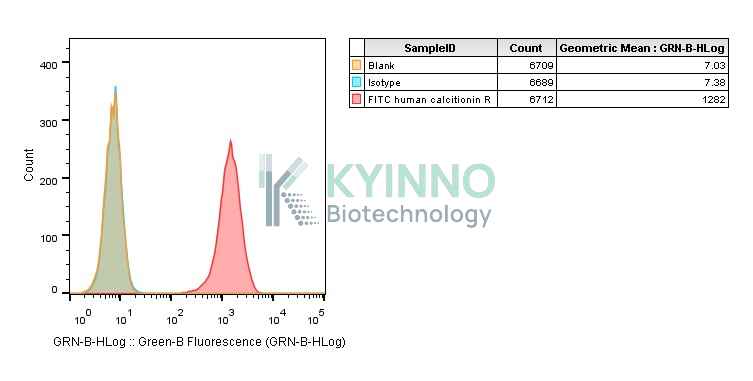
Figure1: Characterization of CALCR overexpressing in COS7 stable clones using FACS.

Figure2: Characterization of COS7-CALCR-RAMP3 cell line stable clone using PCR sequencing.

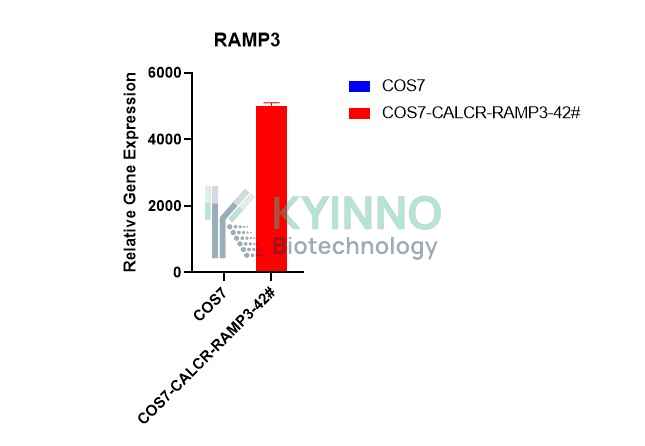
Figure 3. Characterization of CALCR-RAMP3 over-expression in the COS7-CALCR-RAMP3 stable clone using qPCR.

Cell Resuscitation

  1. Prewarm culture medium (DMEM + 10% FBS + 4 μg/mL Puromycin) in a 37°C water bath.
  2. Thaw the frozen vial in a 37°C water bath for 1-2 minutes.
  3. Transfer the vial into biosafety cabinet, and wipe the surface with 70% ethanol.
  4. Unscrew the top of the vial and transfer the cell suspension gently into a sterile centrifuge tube containing 9.0mL complete culture medium.
  5. Spin at ~ 125 × g for 5-7 minutes at room temperature, and discard the supernatant without disturbing the pellet.
  6. Resuspend cell pellet with the appropriate volume of complete medium and transfer the cell suspension into a T25 culture flask.
  7. Incubate the flask at 37°C, 5% CO2 incubator.
  8. Split saturated culture 1:4-1:5 every 2-3 days; seed out at about 1-3 × 10⁵ cells/mL.

Cell Freezing

  1. Prepare the freezing medium (70% DMEM + 20% FBS + 10% DMSO) fresh immediately before use.
  2. Keep the freezing medium on ice and label cryovials.
  3. Transfer cells to a sterile, conical centrifuge tube, and count the cells.
  4. Centrifuge the cells at 250×g for 5 minutes at room temperature and carefully aspirate off the medium.
  5. Resuspend the cells at a density of at least 3×10⁶ cells/mL in chilled freezing medium.
  6. Aliquot 1 mL of the cell suspension into each cryovial.
  7. Freeze cells in the CoolCell freezing container overnight in a -80°C freezer.
  8. Transfer vials to liquid nitrogen for long-term storage.

References

  1. Tsai FJ, Chen WC, Chen HY, Tsai CH. The ALUI calcitonin receptor gene polymorphism (TT) is associated with low bone mineral density and susceptibility to osteoporosis in postmenopausal women. Gynecol Obstet Invest. 2003;55(2):82-7. doi: 10.1159/000070179. PMID: 12771454.
  2. Wookey PJ, McLean CA, Hwang P, Furness SG, Nguyen S, Kourakis A, Hare DL, Rosenfeld JV. The expression of calcitonin receptor detected in malignant cells of the brain tumour glioblastoma multiforme and functional properties in the cell line A172. Histopathology. 2012 May;60(6):895-910. doi: 10.1111/j.1365-2559.2011.04146.x. Epub 2012 Feb 15. PMID: 22335784.
  3. Flahaut M, Pfister C, Rossier BC, Firsov D. N-Glycosylation and conserved cysteine residues in RAMP3 play a critical role for the functional expression of CRLR/RAMP3 adrenomedullin receptor. Biochemistry. 2003 Sep 2;42(34):10333-41. doi: 10.1021/bi0347508. PMID: 12939163.
Please enable JavaScript in your browser to complete this form.