

KC-5047

3A9-mouse-CD3E-mouse-CD3D-KO Cell Line

×
Please enable JavaScript in your browser to complete this form.
54069
Home » 3A9-mouse-CD3E-mouse-CD3D-KO Cell Line

Background of 3A9-mouse-CD3E-mouse-CD3D-KO Cell Line

The mouse CD3D gene encodes the delta chain of the CD3 complex, an essential component of the T-cell receptor (TCR) signaling pathway. This protein plays a pivotal role in T-cell development and activation by facilitating signal transduction following antigen recognition. The CD3D molecule associates with other CD3 chains (epsilon, gamma, and zeta) to form a stable complex that interacts with the TCR alpha/beta or gamma/delta heterodimers. Mutations or deficiencies in CD3D can lead to impaired T-cell function and immune system disorders. Studies have shown that CD3D is crucial for maintaining peripheral T-cell homeostasis and ensuring effective immune responses against pathogens. Understanding the role of CD3D in T-cell biology provides insights into potential therapeutic targets for autoimmune diseases and cancer immunotherapy.

Specifications

Catalog NumberKC-5047
Cell Line Name3A9-mouse-CD3E-mouse-CD3D-KO Cell Line
Clone Number4B3
Host Cell Line3A9-mouse-CD3E-KO-4C2
DescriptionStable 3A9-mouse-CD3E-KO clone with mouse CD3D gene knockout, No.4B3
QuantityTwo vials of frozen cells (≥2-106/vial)
StabilityStable in culture over a minimum of 10 passages
ApplicationDrug screening and biological assays
Freezing MediumRPMI1640+20% FBS+10% DMSO
Propagation MediumRPMI1640+10% FBS
Selection MarkerNA
MorphologyLymphoblast
SubcultureSplit saturated culture 1:5-1:10 every 1-2 days; seed out at about 1-3 × 10⁵ cells/mL
Incubation37 °C with 5% CO2
StorageLiquid nitrogen immediately upon receiving
Doubling TimeApproximately 16 hours
Mycoplasma StatusNegative

Cell Line Generation

3A9-mouse-CD3E-mouse-CD3D-KO cell line was generated using the CRISPR method.

Characterization

Figure 1: Characterization of 3A9-mouse-CD3E-KO cell line stable clone using PCR sequencing.

Figure 2: Characterization of 3A9-mouse-CD3E-KO cell line stable clone using RT-PCR sequencing.

Figure 3: Characterization of 3A9-mouse-CD3E-mouse-CD3D-KO cell line stable clone using PCR sequencing.
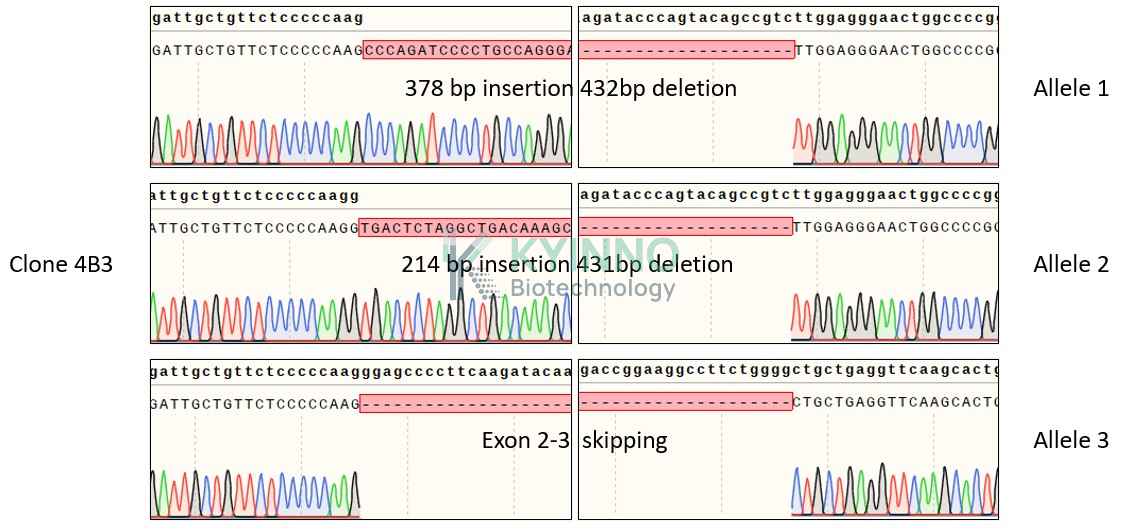
Figure 4: Characterization of 3A9-mouse-CD3E-mouse-CD3D-KO cell line stable clone using RT-PCR sequencing.
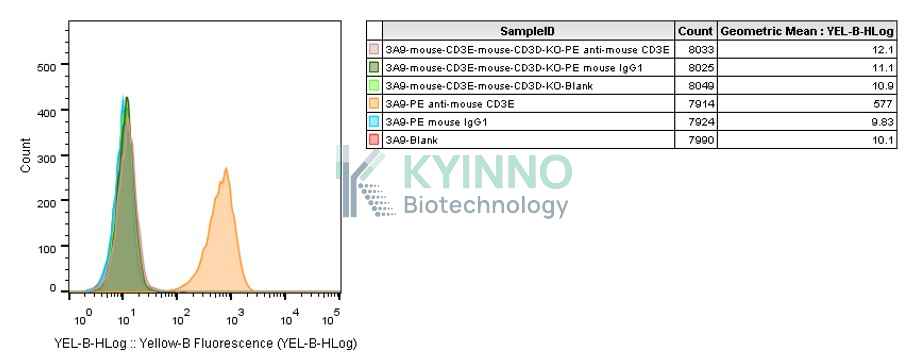
Figure 5: Characterization of 3A9-mouse-CD3E-mouse-CD3D-KO cell line stable clone using FACS.

Cell Resuscitation

  1. Prewarm culture medium (RPMI1640 + 10% FBS) in a 37°C water bath.
  2. Thaw the frozen vial in a 37°C water bath for 1-2 minutes.
  3. Transfer the vial into biosafety cabinet, and wipe the surface with 70% ethanol.
  4. Unscrew the top of the vial and transfer the cell suspension gently into a sterile centrifuge tube containing 9.0mL complete culture medium.
  5. Spin at ~ 125 × g for 5-7 minutes at room temperature, and discard the supernatant without disturbing the pellet.
  6. Resuspend cell pellet with the appropriate volume of complete medium and transfer the cell suspension into a T25 culture flask.
  7. Incubate the flask at 37°C, 5% CO2 incubator.
  8. Split saturated culture 1:5-1:10 every 1-2 days; seed out at about 1-3 × 10⁵ cells/mL.

Cell Freezing

  1. Prepare the freezing medium (70% RPMI-1640 + 20% FBS + 10% DMSO) fresh immediately before use.
  2. Keep the freezing medium on ice and label cryovials.
  3. Transfer cells to a sterile, conical centrifuge tube, and count the cells.
  4. Centrifuge the cells at 250×g for 5 minutes at room temperature and carefully aspirate off the medium.
  5. Resuspend the cells at a density of at least 3×10⁶ cells/mL in chilled freezing medium.
  6. Aliquot 1 mL of the cell suspension into each cryovial.
  7. Freeze cells in the CoolCell freezing container overnight in a -80°C freezer.
  8. Transfer vials to liquid nitrogen for long-term storage.

References

  1. Roifman CM. CD3 delta immunodeficiency. Curr Opin Allergy Clin Immunol. 2004 Dec;4(6):479-84. doi: 10.1097/00130832-200412000-00002. PMID: 15640687.
  2. Wucherpfennig KW, Gagnon E, Call MJ, Huseby ES, Call ME. Structural biology of the T-cell receptor: insights into receptor assembly, ligand recognition, and initiation of signaling. Cold Spring Harb Perspect Biol. 2010 Apr;2(4):a005140. doi: 10.1101/cshperspect.a005140. Epub 2010 Mar 17. PMID: 20452950; PMCID: PMC2845206.
  3. Dave VP, Cao Z, Browne C, Alarcon B, Fernandez-Miguel G, Lafaille J, de la Hera A, Tonegawa S, Kappes DJ. CD3 delta deficiency arrests development of the alpha beta but not the gamma delta T cell lineage. EMBO J. 1997 Mar 17;16(6):1360-70. doi: 10.1093/emboj/16.6.1360. PMID: 9135151; PMCID: PMC1169733.
  4. https://www.ncbi.nlm.nih.gov/gene/12500
Please enable JavaScript in your browser to complete this form.