
KC-5205

CHOK1-mouse-GARP-TGFB1 Cell Line

×
Please enable JavaScript in your browser to complete this form.
57208
Home » CHOK1-mouse-GARP-TGFB1 Cell Line

Background of CHOK1-mouse-GARP-TGFB1 Cell Line

  1. LRRC32 (Leucine Rich Repeat Containing 32) , also known as GARP, is a Protein Coding gene. This gene encodes a type I membrane protein which contains 20 leucine-rich repeats. Alterations in the chromosomal region 11q13-11q14 are involved in several pathologies.Diseases associated with LRRC32 include Cleft Palate, Proliferative Retinopathy, And Developmental Delay and Vitreoretinal Degeneration. An important paralog of this gene is NRROS.
  2. This gene encodes a secreted ligand of the TGF-beta (transforming growth factor-beta) superfamily of proteins. Ligands of this family bind various TGF-beta receptors leading to recruitment and activation of SMAD family transcription factors that regulate gene expression. The encoded preproprotein is proteolytically processed to generate a latency-associated peptide (LAP) and a mature peptide, and is found in either a latent form composed of a mature peptide homodimer, a LAP homodimer, and a latent TGF-beta binding protein, or in an active form consisting solely of the mature peptide homodimer. The mature peptide may also form heterodimers with other TGFB family members. This encoded protein regulates cell proliferation, differentiation and growth, and can modulate expression and activation of other growth factors including interferon gamma and tumor necrosis factor alpha. This gene is frequently upregulated in tumor cells, and mutations in this gene result in Camurati-Engelmann disease.

Specifications

Catalog NumberKC-5205
Cell Line NameCHOK1-mouse-GARP-TGFB1 Cell Line
Clone Number1#
Host Cell LineCHOK1
DescriptionCHOK1 cell line stably expressing exogenous mouse-GARP and mouse-TGFB1 gene
QuantityTwo vials of frozen cells (≥2-106/vial)
StabilityStable in culture over a minimum of 10 passages
ApplicationDrug screening and biological assays
Freezing Medium70% RPMI1640 + 20% FBS + 10% DMSO
Propagation MediumRPMI1640 + 10% FBS + 10 μg/mL Puromycin
Selection MarkerPuromycin
MorphologyFibroblastoid cells growing as monolayer
SubcultureSplit saturated culture 1:4-1:8 every 2-3 days; seed out at about 1-2 × 10⁵ cells/mL
Incubation37 °C with 5% CO2
StorageLiquid nitrogen immediately upon receiving
Doubling TimeApproximately 30 hours
Mycoplasma StatusNegative

Cell Line Generation

CHOK1-mouse-GARP-TGFB1 cell line was generated using a lentiviral vector expressing the mouse-GARP-TGFB1 sequence.

Characterization

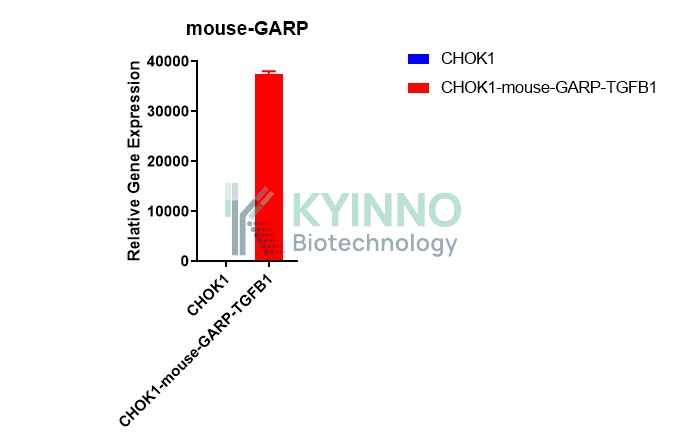
Figure 1: Characterization of mouse GARP overexpression in CHOK1-mouse-GARP-TGFB1 stable clones using qPCR.

Figure 2: Characterization of mouse TGFB1 overexpression in CHOK1-mouse-GARP-TGFB1 stable clones using qPCR.
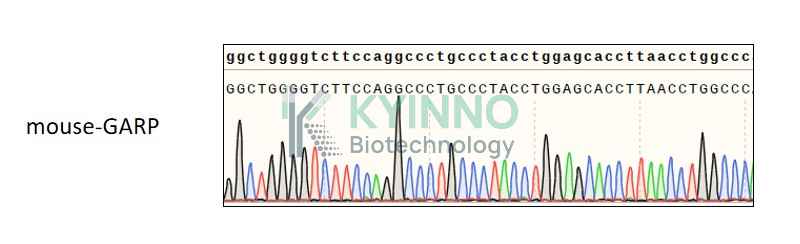
Figure 3: Characterization of mouse GARP in the CHOK1-mouse-GARP-TGFB1 cell line stable clone using PCR sequencing.
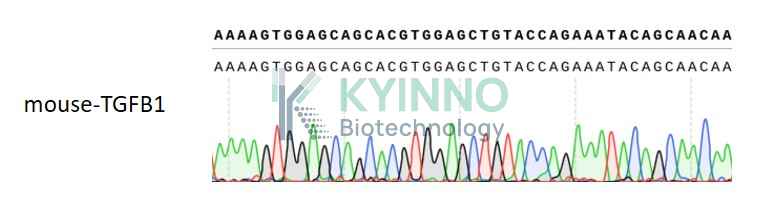
Figure 4: Characterization of mouse TGFB1 in the CHOK1-mouse-GARP-TGFB1 cell line stable clone using PCR sequencing.

Cell Resuscitation

  1. Prewarm culture medium (RPMI1640 supplemented with 10% FBS and 10 μg/mL puromycin) in a 37°C water bath.
  2. Thaw the frozen vial in a 37°C water bath for 1-2 minutes.
  3. Transfer the vial into biosafety cabinet, and wipe the surface with 70% ethanol.
  4. Unscrew the top of the vial and transfer the cell suspension gently into a sterile centrifuge tube containing 9.0 mL complete culture medium.
  5. Spin at ~ 125 × g for 5-7 minutes at room temperature, and discard the supernatant without disturbing the pellet.
  6. Resuspend cell pellet with the appropriate volume of complete medium and transfer the cell suspension into a T25 culture flask.
  7. Incubate the flask at 37°C, 5% CO2 incubator.
  8. Split saturated culture 1:4-1:8 every 2-3 days; seed out at about 1-2 × 10⁵ cells/mL.

Cell Freezing

  1. Prepare the freezing medium (70% RPMI1640 + 20% FBS + 10% DMSO) fresh immediately before use.
  2. Keep the freezing medium on ice and label cryovials.
  3. Transfer cells to a sterile, conical centrifuge tube, and count the cells.
  4. Centrifuge the cells at 250×g for 5 minutes at room temperature and carefully aspirate off the medium.
  5. Resuspend the cells at a density of at least 3×10⁶ cells/mL in chilled freezing medium.
  6. Aliquot 1 mL of the cell suspension into each cryovial.
  7. Freeze cells in the CoolCell freezing container overnight in a -80°C freezer.
  8. Transfer vials to liquid nitrogen for long-term storage.

References

  1. Carrillo-Gálvez AB, Quintero JE, Rodríguez R, Menéndez ST, Victoria González M, Blanco-Lorenzo V, Allonca E, de Araújo Farias V, González-Correa JE, Erill-Sagalés N, Martínez-Zubiaurre I, Hellevik T, Sánchez-Hernández S, Muñoz P, Zurita F, Martín F, Rodríguez-Manzaneque JC, Anderson P. GARP promotes the proliferation and therapeutic resistance of bone sarcoma cancer cells through the activation of TGF-β. Cell Death Dis. 2020 Nov 17;11(11):985. doi: 10.1038/s41419-020-03197-z. PMID: 33203838; PMCID: PMC7673987.
Please enable JavaScript in your browser to complete this form.