KC-5566

NCI-H1975-EGFR-L858R-C797S-Flag-cog Cell Line

×
Please enable JavaScript in your browser to complete this form.
57100
Home » NCI-H1975-EGFR-L858R-C797S-Flag-cog Cell Line

Background of NCI-H1975-EGFR-L858R-C797S-Flag-cog Cell Line

Epidermal Growth Factor Receptor (EGFR) is a transmembrane glycoprotein that constitutes one of the four members of ErbB family of tyrosine kinase receptors. The epidermal growth factor receptor (EGFR) is a growth factor receptor that induces cell differentiation and proliferation upon activation through the binding of one of its ligands. The receptor is located at the cell surface, where the binding of a ligand activates a tyrosine kinase in the intracellular region of the receptor. This tyrosine kinase phosphorylates a number of intracellular substrates that activates pathways leading to cell growth, DNA synthesis and the expression of oncogenes such as fos and jun. EGFR is abnormally activated by various mechanisms like receptor overexpression, mutation, ligand-dependent receptor dimerization, ligand-independent activation and is associated with the development of variety of human cancers. EGFR mutations, including L858R (exon 21) and C797S (exon 20), drive non-small cell lung cancer (NSCLC) progression. L858R is a common activating mutation sensitizing tumors to first-/second-generation EGFR tyrosine kinase inhibitors (TKIs), such as gefitinib. However, acquired resistance frequently arises through the C797S mutation, which counters third-generation TKIs (e.g., osimertinib) and often coexists with the T790M resistance mutation.

Specifications

Catalog NumberKC-5566
Cell Line NameNCI-H1975-EGFR-L858R-C797S-Flag-cog Cell Line
Clone Number1#
Host Cell LineNCI-H1975
DescriptionStable NCI-H1975 clone expressing exogenous EGFR-L858R-C797S-Flag-cog gene.
QuantityTwo vials of frozen cells (≥2-106/vial)
StabilityStable in culture over a minimum of 10 passages
ApplicationDrug screening and biological assays
Freezing Medium70% RPMI1640+20% FBS+10% DMSO
Propagation MediumRPMI1640+10%FBS+1μg/mL Puromycin
Selection MarkerPuromycin
MorphologyEpithelial
SubcultureSplit saturated culture 1:3~1:6 every 2-3 days; seed out at about 1-3 × 10⁵ cells/mL
Incubation37 °C with 5% CO2
StorageLiquid nitrogen immediately upon receiving
Doubling TimeApproximately 30 hours
Mycoplasma StatusNegative

Cell Line Generation

NCI-H1975-EGFR-L858R-C797S-Flag-cog cell Line was generated using retrovirus vector expressing EGFR-L858R-C797S-Flag-cog sequence.

Characterization

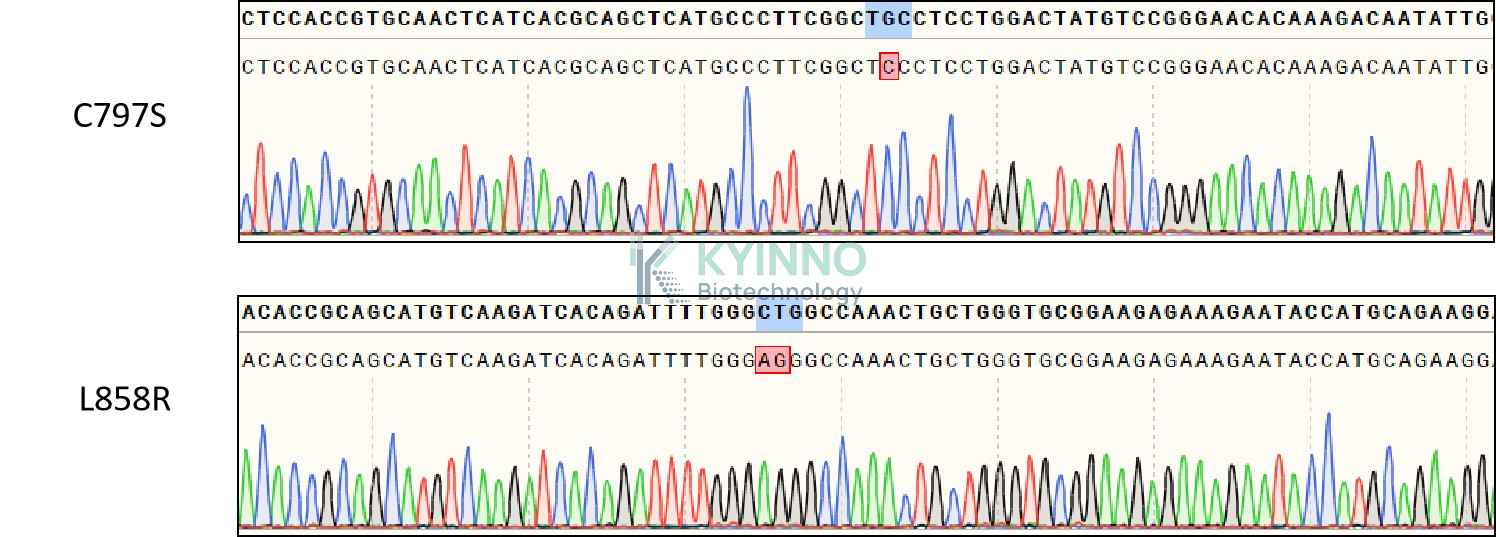
Figure 1: Characterization of NCI-H1975-EGFR-L858R-C797S-Flag-cog Cell Line stable clone using PCR sequencing.

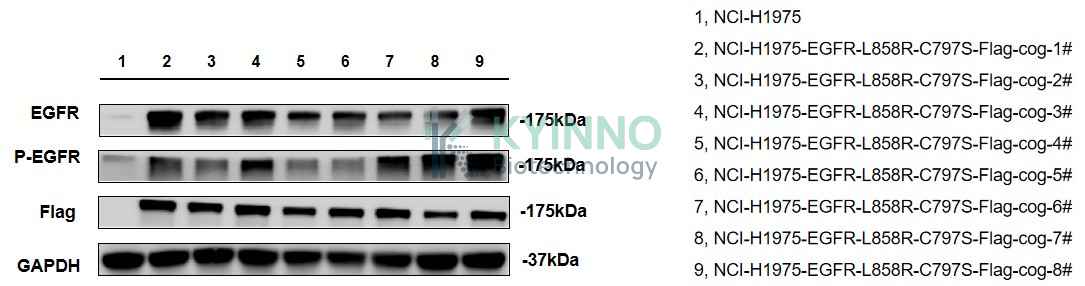
Figure 3: Characterization of NCI-H1975-EGFR-L858R-C797S-Flag-cog Cell Lines stable clone using Western blot.

Cell Resuscitation

1. Prewarm culture medium (RPMI1640 supplemented with 10% FBS and 1μg/mL Puromycin)in a 37°C water bath.
2. Thaw the frozen vial in a 37°C water bath for 1-2 minutes.
3. Transfer the vial into biosafety cabinet, and wipe the surface with 70% ethanol.
4. Unscrew the top of the vial and transfer the cell suspension gently into a sterile centrifuge tube containing 9.0mL complete culture medium.
5. Spin at ~ 125 × g for 5-7 minutes at room temperature, and discard the supernatant without disturbing the pellet.
6. Resuspend cell pellet with the appropriate volume of complete medium and transfer the cell suspension into a T25 culture flask.
7. Incubate the flask at 37°C, 5% CO2 incubator.
8. Split saturated culture 1:3~1:6 every 2-3 days; seed out at about 1-3 × 10⁵ cells/mL.

Cell Freezing

1. Prepare the freezing medium (70% RPMI-1640 + 20% FBS + 10% DMSO) fresh immediately before use.
2. Keep the freezing medium on ice and label cryovials.
3. Transfer cells to a sterile, conical centrifuge tube, and count the cells.
4. Centrifuge the cells at 250×g for 5 minutes at room temperature and carefully aspirate off the medium.
5. Resuspend the cells at a density of at least 3×10⁶ cells/mL in chilled freezing medium.
6. Aliquot 1 mL of the cell suspension into each cryovial.
7. Freeze cells in the CoolCell freezing container overnight in a -80°C freezer.
8. Transfer vials to liquid nitrogen for long-term storage.

References

1. Singh D, Attri BK, Gill RK, Bariwal J. Review on EGFR Inhibitors: Critical Updates. Mini Rev Med Chem. 2016;16(14):1134-66. doi: 10.2174/1389557516666160321114917. PMID: 26996617.
2. Voldborg BR, Damstrup L, Spang-Thomsen M, Poulsen HS. Epidermal growth factor receptor (EGFR) and EGFR mutations, function and possible role in clinical trials. Ann Oncol. 1997 Dec;8(12):1197-206. doi: 10.1023/a:1008209720526. PMID: 9496384.
3. Lu X, Yu L, Zhang Z, Ren X, Smaill JB, Ding K. Targeting EGFRL858R/T790M and EGFRL858R/T790M/C797S resistance mutations in NSCLC: Current developments in medicinal chemistry. Med Res Rev. 2018 Sep;38(5):1550-1581. doi: 10.1002/med.21488. Epub 2018 Jan 26. PMID: 29377179.

Please enable JavaScript in your browser to complete this form.