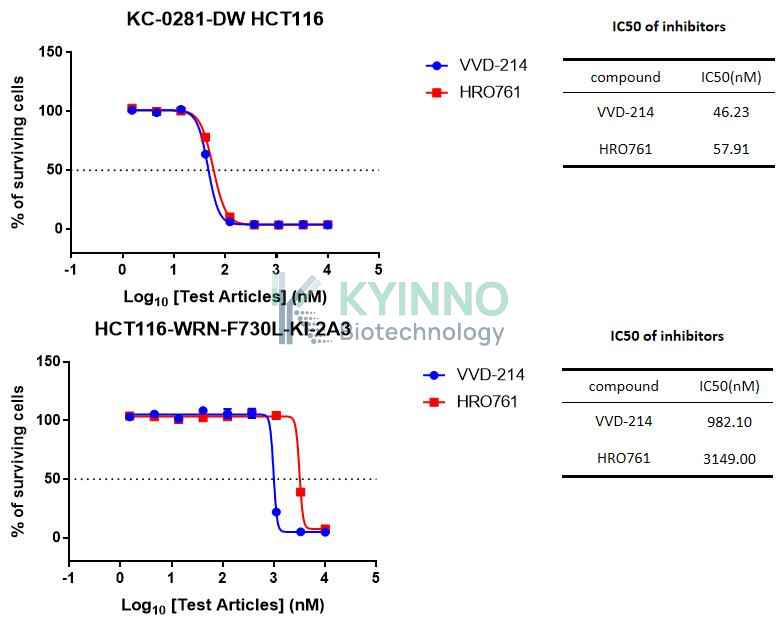
The WRN gene encodes a member of the RecQ helicase family, which plays a critical role in maintaining genomic stability through its involvement in DNA repair, replication, recombination, and telomere maintenance. Mutations in WRN are associated with Werner syndrome (WS), a rare autosomal recessive disorder characterized by premature aging, genomic instability, and increased cancer susceptibility. The WRN protein possesses 3′→5′ helicase and 3′→5′ exonuclease activities, both of which are essential for its function in DNA metabolism. Given its importance in preserving genomic integrity, understanding the functional consequences of WRN mutations is crucial for elucidating the molecular mechanisms underlying WS and related disorders.The F730L mutation in WRN is a missense variant that substitutes phenylalanine (F) with leucine (L) at position 730 within the helicase domain.While the exact functional impact of this mutation remains under investigation, structural and biochemical studies suggest that residue F730 may play a role in maintaining the stability or catalytic activity of the helicase domain. Given that other mutations in the helicase domain have been shown to impair WRN’s enzymatic activity and contribute to WS pathogenesis, the F730L variant warrants further characterization to determine its potential effects on WRN function and cellular phenotypes.