
KC-6601

22RV1-PDL1-GFP-Luc2-Cell-Line

×
请在浏览器中启用JavaScript来完成此表单。
64225
Home » 22RV1-PDL1-GFP-Luc2-Cell-Line

Background of 22RV1-PDL1-GFP-Luc2-Cell-Line

PDL1 encoded by this gene is an immune inhibitory receptor ligand that is expressed by hematopoietic and non-hematopoietic cells, such as T cells and B cells and various types of tumor cells. The encoded protein is a type I transmembrane protein that has immunoglobulin V-like and C-like domains. Interaction of this ligand with its receptor inhibits T-cell activation and cytokine production. During infection or inflammation of normal tissue, this interaction is important for preventing autoimmunity by maintaining homeostasis of the immune response. In tumor microenvironments, this interaction provides an immune escape for tumor cells through cytotoxic T-cell inactivation. Mice deficient for this gene display a variety of phenotypes including decreased allogeneic fetal survival rates and severe experimental autoimmune encephalomyelitis.
Luciferase is an oxidative enzyme that can produce bioluminescence with addition of luciferin, but doesn’t need an external light source unlike fluorescent proteins. Photo emission can be detected directly by light sensitive devices. Such as luminometers or modified microscopes. Luciferase is widely used in many fields of biological research, such as transcriptional activity, kinase or other enzyme activity, cellular ATP level, and whole animal imaging.
Green fluorescent protein (GFP) is a β - barrel protein 1 composed of 238 amino acids with a molecular weight of approximately 27 kDa. GFP was isolated from the crystal jellyfish Aequorea Victoria. GFP can convert the blue fluorescence emitted by jellyfish luminescent protein through chemical reactions into green fluorescence through energy transfer. The excitation wavelength of GFP is 488 nm, and there is an emission peak at approximately 507 nm.

Specifications

Catalog NumberKC-6601
Cell Line Name22RV1-PDL1-GFP-Luc2-Cell-Line
NCBI/UniProt Accession NumberNM_014143
Clone Number32-20#
Host Cell Line22RV1
DescriptionStable 22RV1 expressing exogenous PDL1 and GFP and Luciferase gene
QuantityOne vial of frozen cells (≥2-106/vial)
StabilityStable in culture over a minimum of 10 passages
ApplicationDrug screening and biological assays
Freezing Medium70% RPMI 1640 + 20% FBS + 10% DMSO
Propagation MediumRPMI 1640 + 10% FBS+ 1μg/mL Puromycin
Selection MarkerPuromycin
MorphologyEpithelial
SubcultureSplit saturated culture 1:3-1:6 every 3-4 days; seed out at about 1-3 × 10⁵ cells/mL
Incubation37 °C with 5% CO2
StorageLiquid nitrogen immediately upon receiving
Doubling TimeApproximately 49 hours
Mycoplasma StatusNegative

Cell Line Generation

22RV1-PDL1-GFP-Luc2-cell-line was generated using a lentiviral vector expressing the PDL1 and GFP and Luciferase sequence.

Characterization

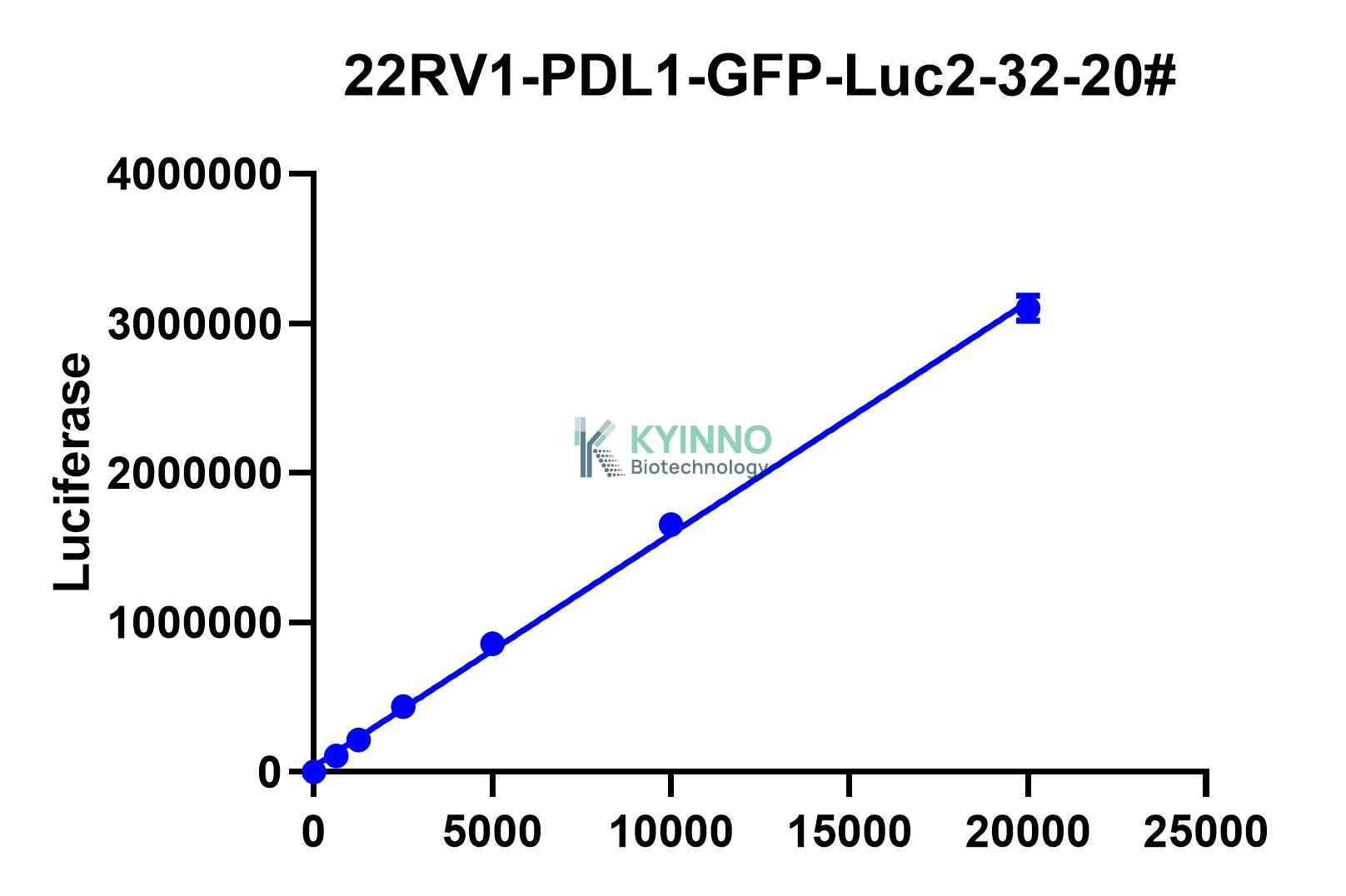
Figure 1: Characterization of the 22RV1-PDL1-GFP-Luc2-cell-line stable clone using Bright-Lite Luciferase Assay System in the conditions of different cell number.
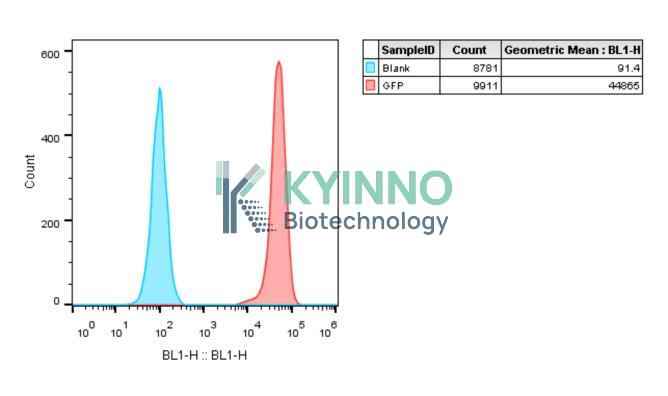
Figure 2: Characterization of GFP overexpression in the 22RV1-PDL1-GFP-Luc2 stable clone using FACS.
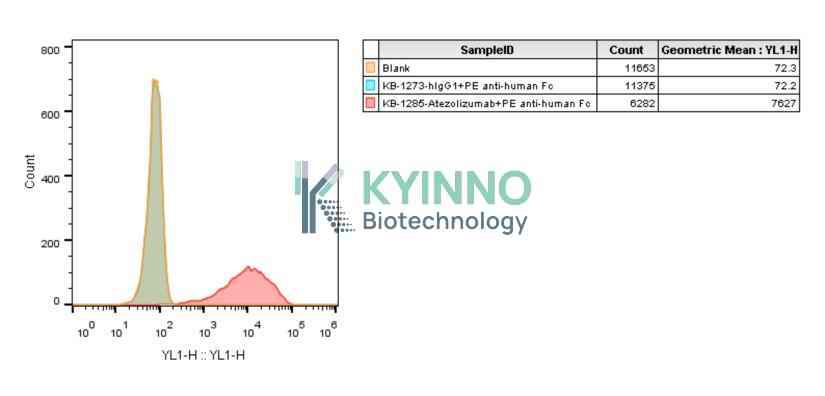
Figure 3: Characterization of PDL1 overexpression in the 22RV1-PDL1-GFP-Luc2 stable clone using FACS.

Cell Resuscitation

1. Prewarm culture medium (RPMI 1640 supplemented with 10% FBS and 1μg/mL Puromycin) in a 37°C water bath.
2. Thaw the frozen vial in a 37°C water bath for 1-2 minutes.
3. Transfer the vial into biosafety cabinet, and wipe the surface with 70% ethanol.
4. Unscrew the top of the vial and transfer the cell suspension gently into a sterile centrifuge tube containing 9.0mL complete culture medium.
5. Spin at ~ 125 × g for 5-7 minutes at room temperature, and discard the supernatant without disturbing the pellet.
6. Resuspend cell pellet with the appropriate volume of complete medium and transfer the cell suspension into a T25 culture flask.
7. Incubate the flask at 37°C, 5% CO2 incubator.
8. Split saturated culture 1:3-1:6 every 3-4 days; seed out at about 1-3 × 10⁵ cells/mL.

Cell Freezing

1. Prepare the freezing medium (RPMI 1640 + 20% FBS + 10% DMSO) fresh immediately before use.
2. Keep the freezing medium on ice and label cryovials.
3. Transfer cells to a sterile, conical centrifuge tube, and count the cells.
4. Centrifuge the cells at 250×g for 5 minutes at room temperature and carefully aspirate off the medium.
5. Resuspend the cells at a density of at least 3×10⁶ cells/mL in chilled freezing medium.
6. Aliquot 1 mL of the cell suspension into each cryovial.
7. Freeze cells in the CoolCell freezing container overnight in a -80°C freezer.
8. Transfer vials to liquid nitrogen for long-term storage

References

1.Greer LF, Szalay AA (2002). "Imaging of light emission from the expression of luciferases in living cells and organisms: a review". Luminescence. 17 (1): 43–74. doi:10.1002/bio.676. PMID 11816060.
2.Pieribone V, Gruber D. Aglow in the Dark: The Revolutionary Science of Biofluorescence. Cambridge: Belknap Press. 2006. ISBN 0-674-01921-0. OCLC 60321612. Popular science book describing history and discovery of GFP.
3.Kuai L, Xiang YW, Chen QL, Ru Y, Yin SY, Li W, Jiang JS, Luo Y, Song JK, Lu B, Luo Y, Li B. PD-L1 Triggered by Binding eIF3I Contributes to the Amelioration of Diabetes-Associated Wound Healing Defects by Regulating IRS4. J Invest Dermatol. 2022 Jan;142(1):220-231.e8. doi: 10.1016/j.jid.2021.06.028. Epub 2021 Jul 20. PMID: 34293353.

Use License Agreement

Research Use Only.
Not for use in diagnostic procedures or therapeutic applications.
Redistribution of the cell line or its derivatives is prohibited without prior written permission from Kyinno Biotechnology.
请在浏览器中启用JavaScript来完成此表单。