
KC-4898

LLC-Luc2-GDF15 Cell Line

×
Please enable JavaScript in your browser to complete this form.
53032
Home » LLC-Luc2-GDF15 Cell Line

Background of LLC-Luc2-GDF15 Cell Line

GDF15 (Growth Differentiation Factor 15) is a Protein Coding gene it is a member of the transforming growth factor-β (TGF-β) superfamily. Ligands of this family bind various TGF-beta receptors leading to recruitment and activation of SMAD family transcription factors that regulate gene expression. GDF15 expression and secretion from various organs and tissues is induced in different physiological and pathophysiological states, often linked to mitochondrial stress, leading to highly variable circulating GDF15 levels. Diseases associated with GDF15 include Hyperemesis Gravidarum and Cardiac Rupture. Among its related pathways are Apoptotic Pathways in Synovial Fibroblasts and GPCR Pathway.

Specifications

Catalog NumberKC-4898
Cell Line NameLLC-Luc2-GDF15 Cell Line
Host Cell LineLLC-Luc2
DescriptionStable LLC-Luc2 clone expressing exogenous human GDF15 gene
QuantityTwo vials of frozen cells (≥2-106/vial)
StabilityStable in culture over a minimum of 10 passages
ApplicationDrug screening and biological assays
Freezing Medium70% DMEM + 20% FBS + 10% DMSO
Propagation MediumDMEM + 10% FBS + 1μg/mL Puromycin + 500 μg/mL Hygromycin B
Selection MarkerPuromycin, Hygromycin B
MorphologyEpithelial
SubcultureSplit saturated culture 1:4-1:5 every 2-3 days; seed out at about 1-3 × 10⁵ cells/mL
Incubation37 °C with 5% CO2
StorageLiquid nitrogen immediately upon receiving
Doubling TimeApproximately 30 hours
Mycoplasma StatusNegative

Cell Line Generation

LLC-Luc2-GDF15 cell line was generated using a lentiviral vector expressing the human GDF15 sequence.

Characterization

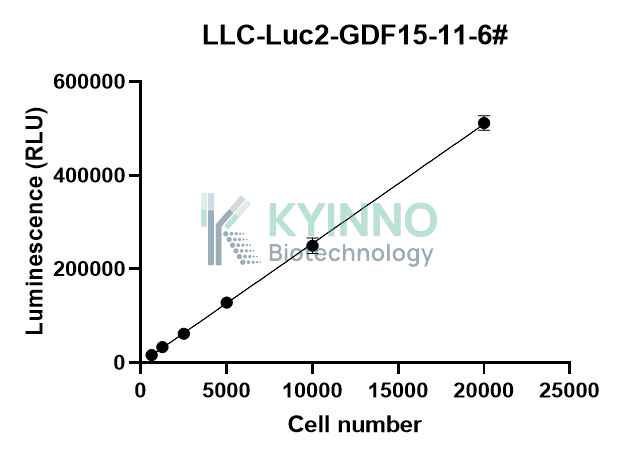
Figure 1: Characterization of luciferase expression in LLC-Luc2-GDF15 using the Bright-Glo Detection.
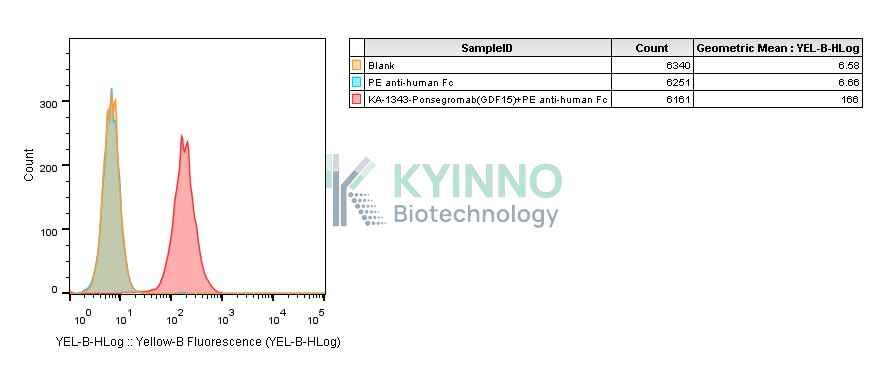
Figure 2: Characterization of human GDF15 overexpression in the LLC-Luc2-GDF15 stable clone using FACS(Cat# KB-1343,Kyinno).

Figure 3: Characterization of human GDF15 in the LLC-Luc2-GDF15 stable clone using PCR sequencing.

Cell Resuscitation

1. Prewarm culture medium (DMEM supplemented with 10% FBS, 1μg/mL puromycin and 500 μg/mL Hygromycin B)in a 37°C water bath.
2. Thaw the frozen vial in a 37°C water bath for 1-2 minutes.
3. Transfer the vial into biosafety cabinet, and wipe the surface with 70% ethanol.
4. Unscrew the top of the vial and transfer the cell suspension gently into a sterile centrifuge tube containing 9.0mL complete culture medium.
5. Spin at ~ 125 × g for 5-7 minutes at room temperature, and discard the supernatant without disturbing the pellet.
6. Resuspend cell pellet with the appropriate volume of complete medium and transfer the cell suspension into a T25 culture flask.
7. Incubate the flask at 37°C, 5% CO2 incubator.
8. Split saturated culture 1:4-1:5 every 2-3 days; seed out at about 1-3 × 10⁵ cells/mL.

Cell Freezing

1. Prepare the freezing medium (70% DMEM + 20% FBS + 10% DMSO) fresh immediately before use.
2. Keep the freezing medium on ice and label cryovials.
3. Transfer cells to a sterile, conical centrifuge tube, and count the cells.
4. Centrifuge the cells at 250×g for 5 minutes at room temperature and carefully aspirate off the medium.
5. Resuspend the cells at a density of at least 3×10⁶ cells/mL in chilled freezing medium.
6. Aliquot 1 mL of the cell suspension into each cryovial.
7. Freeze cells in the CoolCell freezing container overnight in a -80°C freezer.
8. Transfer vials to liquid nitrogen for long-term storage.

References

1. Sigvardsen CM, Richter MM, Engelbeen S, Kleinert M, Richter EA. GDF15 is still a mystery hormone. Trends Endocrinol Metab. 2024 Oct 29:S1043-2760(24)00254-6. doi: 10.1016/j.tem.2024.09.002. Epub ahead of print. PMID: 39472228.
2. Wang, D., Day, E.A., Townsend, L.K. et al. GDF15: emerging biology and therapeutic applications for obesity and cardiometabolic disease. Nat Rev Endocrinol 17, 592–607 (2021).
3. Conte M, Giuliani C, Chiariello A, Iannuzzi V, Franceschi C, Salvioli S. GDF15, an emerging key player in human aging. Ageing Res Rev. 2022 Mar;75:101569. doi: 10.1016/j.arr.2022.101569. Epub 2022 Jan 19. PMID: 35051643.
Please enable JavaScript in your browser to complete this form.