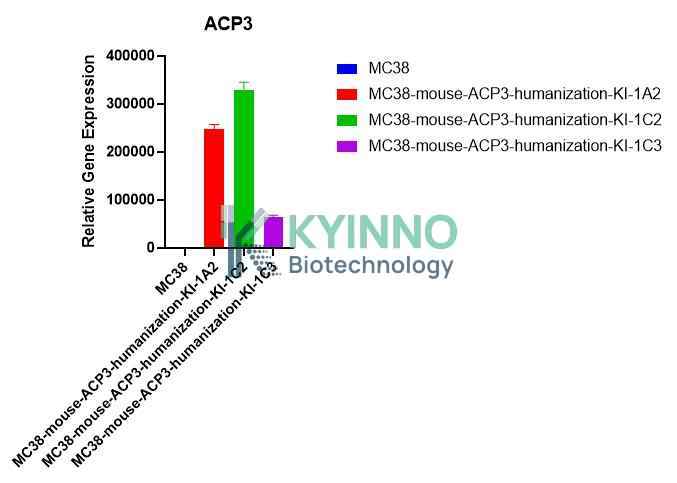
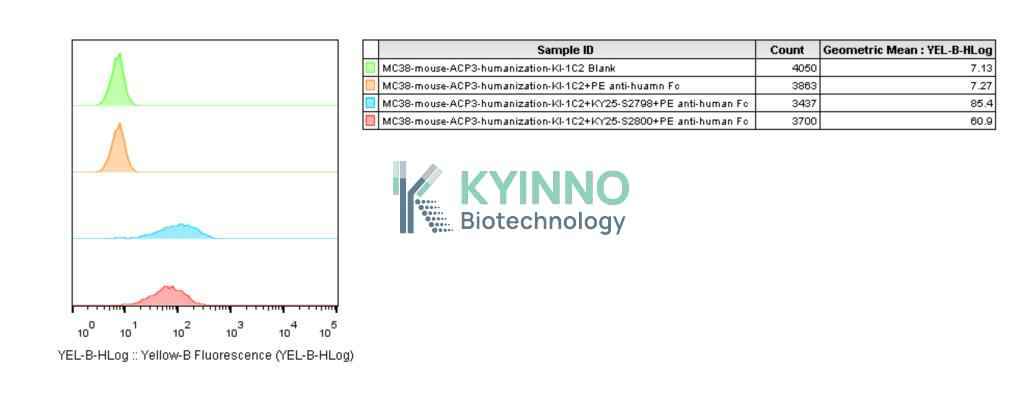
The MC38-mouse-ACP3-humanization-KI cell line is characterized by the in-situ insertion of the human ACP3-CDS region driven by an exogenous promoter at the endogenous mouse Acp3 locus, realizing functional replacement of the murine original gene sequence. This engineered model is primarily used in the development of targeted radioligand therapies (RLT) and prostate cancer-specific immunotherapies, especially for high-throughput screening of ACP3-targeting agents and mechanistic studies of their tumor-homing and therapeutic efficacy. The exogenous promoter-driven independent expression of human ACP3 enables murine colon carcinoma cells to stably exhibit human-specific protein structure and ligand-binding characteristics, which is highly expressed in >95% of prostate cancers including castration-resistant subtypes, providing a reliable platform for the accurate preclinical evaluation of candidate compounds. The outstanding advantage of this model lies in its combination of human-specific ACP3-targeting drug responsiveness with the experimental convenience of a murine cell system. The MC38 cell background ensures excellent genetic manipulability and stable proliferation characteristics, making it suitable for large-scale in vitro screening and subsequent in vivo syngeneic tumor model verification. Concurrently, the independent and high-efficient expression of human ACP3 driven by exogenous promoter guarantees the high clinical relevance of drug screening outcomes, significantly reducing the translational deviation caused by interspecies protein sequence differences and improving the preclinical-to-clinical translation success rate of ACP3-targeted novel therapeutic drugs.