KC-6504

NCI-H1975-CRBN-EGFR-KO-EGFR-L858R-C797S-Flag Cell Line

×
请在浏览器中启用JavaScript来完成此表单。
63138
Home » 细胞系 » NCI-H1975-CRBN-EGFR-KO-EGFR-L858R-C797S-Flag Cell Line

Background of NCI-H1975-CRBN-EGFR-KO-EGFR-L858R-C797S-Flag Cell Line

Cereblon (CRBN) is a substrate receptor of the Cullin-4 RING E3 ubiquitin ligase complex (CRL4CRBN) that plays a pivotal role in targeted protein degradation . Originally associated with autosomal recessive non-syndromic mental retardation, CRBN gained clinical prominence as the primary molecular target of thalidomide and its immunomodulatory drugs (IMiDs) derivatives, lenalidomide and pomalidomide . Upon IMiD binding, CRBN undergoes a neomorphic functional shift, recruiting lymphoid transcription factors IKZF1 (Ikaros) and IKZF3 (Aiolos) for ubiquitination and proteasomal degradation, thereby exerting anti-myeloma effects and modulating immune responses . CRBN mutations, including point mutations and splice variants, occur in 12-30% of IMiD-refractory multiple myeloma patients and represent a key mechanism of acquired drug resistance . Beyond hematologic malignancies, CRBN has emerged as a versatile platform for proteolysis-targeting chimeras (PROTACs), enabling targeted degradation of oncogenic proteins in both hematologic and solid tumors . Recent structural and functional studies classify CRBN mutations into loss-of-function, neutral, and agent-dependent categories, guiding therapeutic strategies including next-generation CELMoD agents .

Specifications

Catalog NumberKC-6504
Cell Line NameNCI-H1975-CRBN-EGFR-KO-EGFR-L858R-C797S-Flag Cell Line
Clone Number1A3
Host Cell LineNCI-H1975-EGFR-KO-EGFR-L858R-C797S-Flag
DescriptionStable NCI-H1975-EGFR-KO-EGFR-L858R-C797S-Flag clone with human CRBN gene knockout
QuantityOne vial of frozen cells (≥2-106/vial)
StabilityStable in culture over a minimum of 10 passages
ApplicationDrug screening and biological assays
Freezing MediumRPMI1640+20% FBS+10% DMSO
Propagation MediumRPMI1640+10%FBS+1μg/ml puromycin
Selection MarkerN/A
MorphologyEpithelial
SubcultureSplit saturated culture 1:3-1:6 every 2-3 days; seed out at about 1-3 × 10⁵ cells/mL
Incubation37 °C with 5% CO2
StorageLiquid nitrogen immediately upon receiving
Doubling TimeApproximately 30 hours
Mycoplasma StatusNegative

Cell Line Generation

NCI-H1975-CRBN-EGFR-KO-EGFR-L858R-C797S-Flag cell line was generated using the CRISPR method.

Characterization

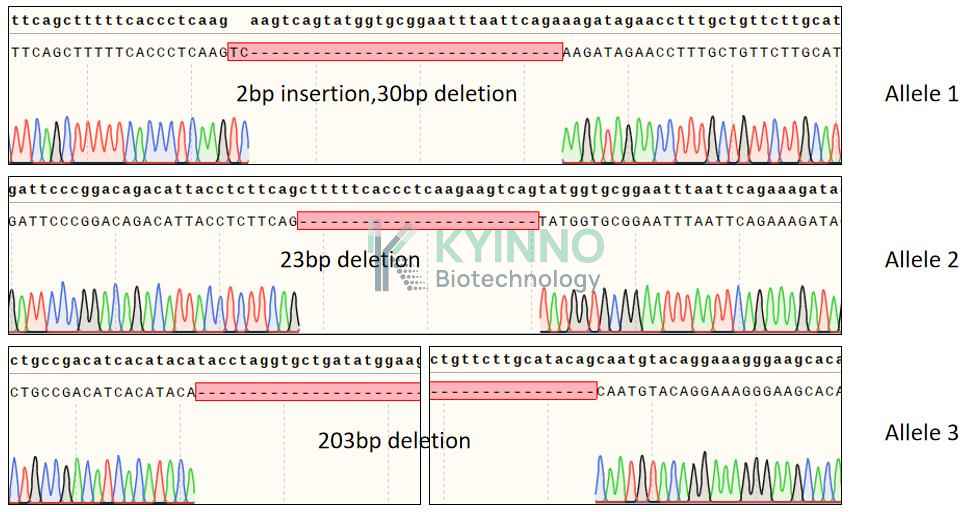
Figure 1: Characterization of NCI-H1975-CRBN-EGFR-KO-EGFR-L858R-C797S-Flag cell line stable clone using PCR sequencing.

Figure 2: Characterization of NCI-H1975-CRBN-EGFR-KO-EGFR-L858R-C797S-Flag cell line stable clone using RT-PCR sequencing.

Figure 3: Characterization of NCI-H1975-CRBN-EGFR-KO-EGFR-L858R-C797S-Flag cell line stable clone using western blot.

Cell Resuscitation

  1. Prewarm culture medium (RPMI1640+10%FBS+1μg/ml puromycin)in a 37°C water bath.
  2. Thaw the frozen vial in a 37°C water bath for 1-2 minutes.
  3. Transfer the vial into biosafety cabinet, and wipe the surface with 70% ethanol.
  4. Unscrew the top of the vial and transfer the cell suspension gently into a sterile centrifuge tube containing 9.0mL complete culture medium.
  5. Spin at ~ 125 × g for 5-7 minutes at room temperature, and discard the supernatant without disturbing the pellet.
  6. Resuspend cell pellet with the appropriate volume of complete medium and transfer the cell suspension into a T25 culture flask.
  7. Incubate the flask at 37°C, 5% CO2 incubator.
  8. Split saturated culture 1:3-1:6 every 2-3 days; seed out at about 1-3 × 10⁵ cells/mL.

Cell Freezing

  1. Prepare the freezing medium (70% RPMI1640 + 20% FBS + 10% DMSO) fresh immediately before use.
  2. Keep the freezing medium on ice and label cryovials.
  3. Transfer cells to a sterile, conical centrifuge tube, and count the cells.
  4. Centrifuge the cells at 250×g for 5 minutes at room temperature and carefully aspirate off the medium.
  5. Resuspend the cells at a density of at least 3×10⁶ cells/mL in chilled freezing medium.
  6. Aliquot 1 mL of the cell suspension into each cryovial.
  7. Freeze cells in the CoolCell freezing container overnight in a -80°C freezer.
  8. Transfer vials to liquid nitrogen for long-term storage.

References

  1. Ito T, et al. (2010). "Identification of a primary target of thalidomide teratogenicity." Science, 327(5971), 1345-1350.
  2. Kortüm KM, et al. (2016). "Targeted sequencing of refractory myeloma reveals a high incidence of mutations in CRBN and Ras pathway genes." Blood, 128(9), 1226-1233.
  3. Thapa R, et al. (2024). "CRBN-PROTACs in Cancer Therapy: From Mechanistic Insights to Clinical Applications." Chem Biol Drug Des, 104(5), e70009.

Use License Agreement

Research Use Only.
Not for use in diagnostic procedures or therapeutic applications.
Redistribution of the cell line or its derivatives is prohibited without prior written permission from Kyinno Biotechnology.
请在浏览器中启用JavaScript来完成此表单。