KC-3384

NCI-H1975-EGFR-L858R-T790M-C797S-HLA-A0201-Cell-Line

×
Please enable JavaScript in your browser to complete this form.
26635
Home » NCI-H1975-EGFR-L858R-T790M-C797S-HLA-A0201-Cell-Line

Background of NCI-H1975-EGFR-L858R-T790M-C797S-HLA-A0201-Cell-Line

HLA-A belongs to HLA class I heavy chain paralogy. This Class I molecule is a heterodimer composed of heavy and light chains (β -2 microglobulin). The heavy chain is anchored in the membrane. Class I molecules play a central role in the immune system by presenting peptides derived from the endoplasmic reticulum lumen that can be recognized by cytotoxic T cells. They are expressed in almost all cells. The heavy chain is approximately 45 kDa, and its gene contains 8 exons. Exon 1 encodes the leading peptide, exons 2 and 3 encode the alpha1 and alpha2 domains, both of which bind to peptides. Exon 4 encodes the alpha3 domain, exon 5 encodes the transmembrane region, and exons 6 and 7 encode the cytoplasmic tail. The polymorphism within exon 2 and exon 3 is responsible for the peptide binding specificity of each class 1 molecule. These polymorphic subtypes are commonly used for bone marrow and kidney transplantation. More than 6000 HLA-A alleles have been described. The HLA system plays an important role in the occurrence and outcome of infectious diseases, including those caused by malaria parasites, human immunodeficiency virus (HIV), and severe acute respiratory syndrome coronavirus (SARS CoV).

Specifications

Catalog NumberKC-3384
Cell Line NameNCI-H1975-EGFR-L858R-T790M-C797S-HLA-A0201-Cell-Line
Host Cell LineNCI-H1975
DescriptionStable NCI-H1975-EGFR-L858R-T790M-C797S clone expressing exogenous HLA-A0201 gene
QuantityTwo vials of frozen cells (≥2-106/vial)
StabilityStable in culture over a minimum of 10 passages
ApplicationDrug screening and biological assays
Freezing Medium70% RPMI 1640 + 20% FBS + 10% DMSO
Propagation MediumRPMI 1640 + 10% FBS + 2μg/mL Puromycin + 100μg/mL Hygromycin B
Selection MarkerPuromycin, Hygromycin B
MorphologyEpithelial
SubcultureSplit saturated culture 1:3-1:6 every 2-3 days; seed out at about 1-3 × 10⁵ cells/mL
Incubation37 °C with 5% CO2
StorageLiquid nitrogen immediately upon receiving
Doubling TimeApproximately 28 hours
Mycoplasma StatusNegative
In Vivo ValidationNA

Cell Line Generation

NCI-H1975-EGFR-L858R-T790M-C797S-HLA-A0201-cell-line was generated using a lentiviral vector expressing the HLA-A0201 sequence.

Characterization

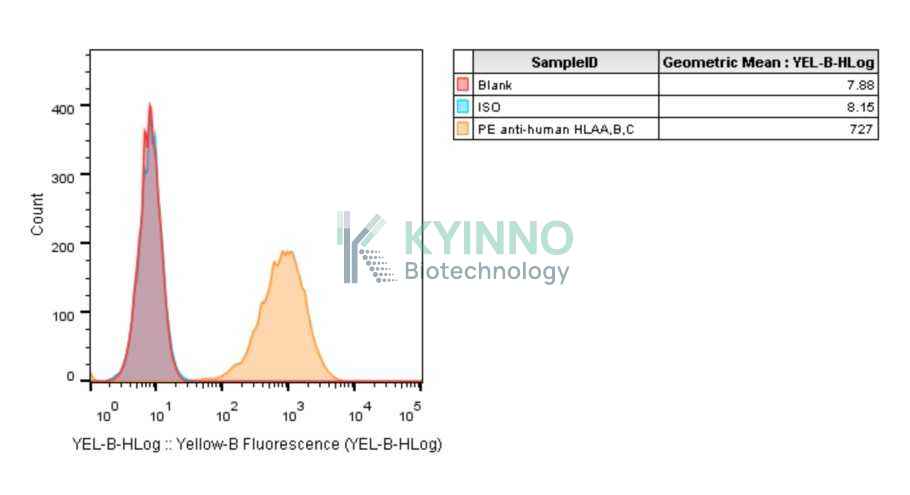
Figure 1: Characterization of HLA-A0201 overexpression in the NCI-H1975-EGFR-L858R-T790M-C797S-HLA-A0201 stable clone using FACS.

Cell Resuscitation

  1. Prewarm culture medium (RPMI 1640 supplemented with 10% FBS and 2μg/mL puromycin and 100μg/mL Hygromycin B)in a 37°C water bath.
  2. Thaw the frozen vial in a 37°C water bath for 1-2 minutes.
  3. Transfer the vial into biosafety cabinet, and wipe the surface with 70% ethanol.
  4. Unscrew the top of the vial and transfer the cell suspension gently into a sterile centrifuge tube containing 9.0mL complete culture medium.
  5. Spin at ~ 125 × g for 5-7 minutes at room temperature, and discard the supernatant without disturbing the pellet.
  6. Resuspend cell pellet with the appropriate volume of complete medium and transfer the cell suspension into a T25 culture flask.
  7. Incubate the flask at 37°C, 5% CO2 incubator.
  8. Split saturated culture 1:3-1:6 every 2-3 days; seed out at about 1-3 × 10⁵ cells/mL.

Cell Freezing

  1. Prepare the freezing medium (70% RPMI 1640 + 20% FBS + 10% DMSO) fresh immediately before use.
  2. Keep the freezing medium on ice and label cryovials.
  3. Transfer cells to a sterile, conical centrifuge tube, and count the cells.
  4. Centrifuge the cells at 250×g for 5 minutes at room temperature and carefully aspirate off the medium.
  5. Resuspend the cells at a density of at least 3×10⁶ cells/mL in chilled freezing medium.
  6. Aliquot 1 mL of the cell suspension into each cryovial.
  7. Freeze cells in the CoolCell freezing container overnight in a -80°C freezer.
  8. Transfer vials to liquid nitrogen for long-term storage.

References

1.Cifuentes RA, Murillo-Rojas J. Alzheimer's disease and HLA-A2: linking neurodegenerative to immune processes through an in silico approach. Biomed Res Int. 2014;2014:791238. doi: 10.1155/2014/791238. Epub 2014 Aug 17. PMID: 25197660; PMCID: PMC4150521. 2.Mashayekhi P, Omrani MD, Yassin Z, Dehghanifard A, Ashouri L, Aghabozorg Afjeh SS, Shabanzadeh Z. Influence of HLA-A, -B, -DR Polymorphisms on the Severity of COVID-19: A Case-Control Study in the Iranian Population. Arch Iran Med. 2023 May 1;26(5):261-266. doi: 10.34172/aim.2023.40. PMID: 38301089; PMCID: PMC10685865. 3.Bicknell DC, Bodmer WF. A mutated HLA-A*0101 allele in the colorectal cell line HCA-7. Tissue Antigens. 2005 Sep;66(3):231-7. doi: 10.1111/j.1399-0039.2005.00456.x. PMID: 16101834.
Please enable JavaScript in your browser to complete this form.