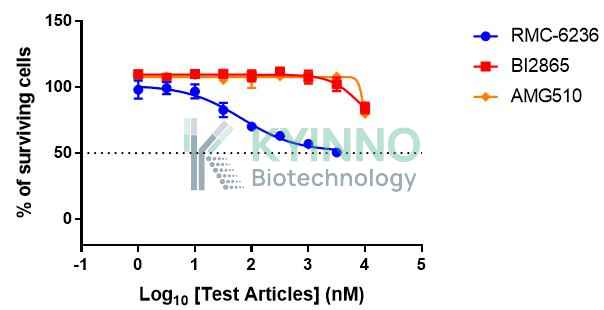
HRAS is a proto-oncogene encoding a small GTPase that acts as a critical molecular switch in the RAS/MAPK signaling pathway, which regulates cell proliferation, differentiation, and survival. Upon growth factor stimulation, HRAS cycles between an active GTP-bound and an inactive GDP-bound state. Oncogenic mutations, most commonly at residues G12, G13, or Q61, impair its GTPase activity, locking HRAS in a constitutively active state that drives uncontrolled cell growth. While mutations in HRAS are less frequent in human cancers than in its paralogs KRAS and NRAS, they are notably prevalent in specific malignancies such as bladder cancer, thyroid cancer (e.g., follicular and undifferentiated types), and head and neck squamous cell carcinoma. Due to the "undruggable" nature of RAS proteins for decades, therapeutic strategies have often focused on inhibiting downstream effectors like MEK. However, the recent development of allele-specific covalent inhibitors targeting specific RAS mutants has revived direct targeting efforts, including for certain HRAS-driven cancers.