KC-3842

PC9-ERBB2-YVMA Cell Line

×
Please enable JavaScript in your browser to complete this form.
34886
Home » PC9-ERBB2-YVMA Cell Line

Background of PC9-ERBB2-YVMA Cell Line

The ERBB2 gene encodes the HER2 protein, a receptor tyrosine kinase belonging to the ERBB family. Overexpression or amplification of ERBB2 is strongly associated with aggressive cancers, particularly breast cancer, where it drives tumor growth, metastasis, and resistance to therapy. Recently, emerging studies have identified a specific mutation in ERBB2, termed YVMA (c.3769G>A; p.Y1257N), which occurs in the kinase domain of the protein. This mutation stabilizes HER2’s active conformation, enhancing oncogenic signaling even in the absence of ligand binding. Clinically, YVMA mutations are linked to poorer prognosis in gastric and breast cancers and have been shown to confer resistance to conventional HER2-targeted therapies like trastuzumab. Understanding YVMA-driven mechanisms may inform novel therapeutic strategies, such as next-generation tyrosine kinase inhibitors (TKIs), to combat treatment-resistant tumors.

Specifications

Catalog NumberKC-3842
Cell Line NamePC9-ERBB2-YVMA Cell Line
Clone Number1C1
Host Cell LinePC9
DescriptionStable PC9 cell line expressing exogenous human ERBB2 gene with YVMA insertion in exon 20
QuantityTwo vials of frozen cells (≥2-106/vial)
StabilityStable in culture over a minimum of 10 passages
ApplicationDrug screening and biological assays
Freezing Medium70% RPMI1640 + 20% FBS + 10% DMSO
Propagation MediumRPMI1640 + 10% FBS + 1µg/mL Puromycin
Selection MarkerPuromycin
MorphologyEpithelial
SubcultureSplit saturated culture 1:3-1:4 every 2-3 days; seed out at about 1-3 × 10⁵ cells/mL
Incubation37 °C with 5% CO2
StorageLiquid nitrogen immediately upon receiving
Doubling TimeApproximately 35 hours
Mycoplasma StatusNegative
In Vivo ValidationNA

Cell Line Generation

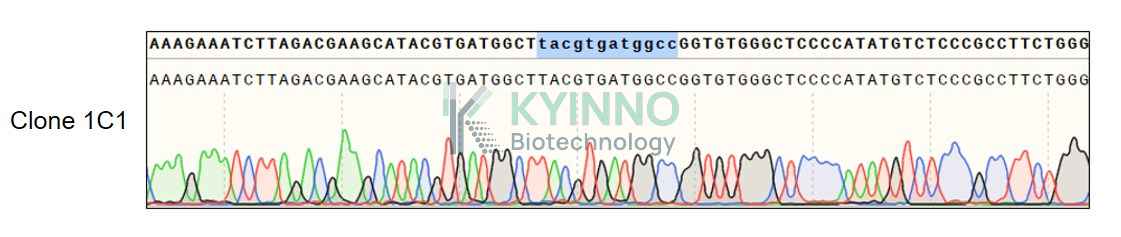
PC9-ERBB2-YVMA-1C1 cell line was generated using a lentiviral vector expressing the human ERBB2-YVMA sequence.

Characterization

Figure 1: Characterization of PC9-ERBB2-YVMA cell line stable clone using PCR sequencing.

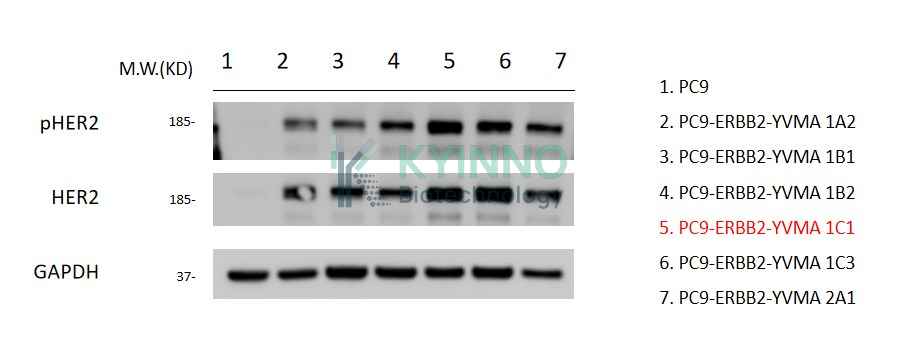
Figure 2: Characterization of human ERBB2-YVMA overexpression in the PC9-ERBB2-YVMA stable clone using Western Blot.

Cell Resuscitation

  1. Prewarm culture medium (RPMI1640 + 10% FBS+ 1µg/mL Puromycin) in a 37°C water bath.
  2. Thaw the frozen vial in a 37°C water bath for 1-2 minutes.
  3. Transfer the vial into biosafety cabinet, and wipe the surface with 70% ethanol.
  4. Unscrew the top of the vial and transfer the cell suspension gently into a sterile centrifuge tube containing 9.0mL complete culture medium.
  5. Spin at ~ 125 × g for 5-7 minutes at room temperature, and discard the supernatant without disturbing the pellet.
  6. Resuspend cell pellet with the appropriate volume of complete medium and transfer the cell suspension into a T25 culture flask.
  7. Incubate the flask at 37°C, 5% CO2 incubator.
  8. Split saturated culture 1:3-1:4 every 2-3 days; seed out at about 1-3 × 10⁵ cells/mL.

Cell Freezing

  1. Prepare the freezing medium (70% RPMI1640 + 20% FBS + 10% DMSO) fresh immediately before use.
  2. Keep the freezing medium on ice and label cryovials.
  3. Transfer cells to a sterile, conical centrifuge tube, and count the cells.
  4. Centrifuge the cells at 250×g for 5 minutes at room temperature and carefully aspirate off the medium.
  5. Resuspend the cells at a density of at least 3×10⁶ cells/mL in chilled freezing medium.
  6. Aliquot 1 mL of the cell suspension into each cryovial.
  7. Freeze cells in the CoolCell freezing container overnight in a -80°C freezer.
  8. Transfer vials to liquid nitrogen for long-term storage.

References

  1. Slamon DJ, Clark GM, Wong SG, Levin WJ, Ullrich A, McGuire WL. Human breast cancer: correlation of relapse and survival with amplification of the HER-2/neu oncogene. Science. 1987 Jan 9;235(4785):177-82. doi: 10.1126/science.3798106. PMID: 3798106.
  2. Zheng YB, Yu Y, Chen B, Hu JL, Jing T, Zhang XP. Inhibitor Response to HER2 G776(YVMA) In-frame Insertion in HER2-positive Breast Cancer. Cancer Invest. 2016;34(3):123-9. doi: 10.3109/07357907.2015.1118113. Epub 2016 Mar 2. PMID: 26934461.
  3. Hicken EJ, Brown K, Dwulet NC, Gaudino JJ, Hansen EP, Hartley DP, Kowalski JP, Laird ER, Lazzara NC, Li B, Mou TC, Mutryn MF, Oko L, Pajk S, Pipal RW, Rosen RZ, Shelp R, Singh A, Wang J, Wise CE, Wong C, Wong JY. Discovery of Potent and Selective Covalent Inhibitors of HER2WT and HER2YVMA. J Med Chem. 2024 Jun 13;67(11):9759-9771. doi: 10.1021/acs.jmedchem.4c00978. Epub 2024 May 31. PMID: 38820338.
Please enable JavaScript in your browser to complete this form.