KC-4432

Raji-CD19-KO-1B2-Cell-Line

×
Please enable JavaScript in your browser to complete this form.
46356
Home » Raji-CD19-KO-1B2-Cell-Line

Background of Raji-CD19-KO-1B2-Cell-Line

The CD19 gene, located on chromosome 16p11.2, encodes a transmembrane protein that plays a crucial role in B cell development and activation. CD19 forms a complex with CD21, CD81, and CD225, enhancing B cell receptor (BCR) signaling and lowering the threshold for B cell activation. This interaction is essential for the adaptive immune response, including the differentiation of B cells into antibody-secreting plasma cells and memory B cells. Recently, CD19 has emerged as a key target in cancer immunotherapy. Chimeric antigen receptor (CAR) T-cell therapy, which involves genetically modifying T cells to recognize and attack CD19-expressing B cells, has shown remarkable success in treating B cell malignancies such as acute lymphoblastic leukemia (ALL) and diffuse large B-cell lymphoma (DLBCL). Understanding the role of CD19 is vital for advancing immunotherapeutic strategies.

Specifications

Catalog NumberKC-4432
Cell Line NameRaji-CD19-KO-1B2-Cell-Line
Host Cell LineRaji
DescriptionStable Raji clone with human CD19 gene knockout, No.1B2
QuantityTwo vials of frozen cells (≥2-106/vial)
StabilityStable in culture over a minimum of 10 passages
ApplicationDrug screening and biological assays
Freezing MediumRPMI1640+20% FBS+10% DMSO
Propagation MediumRPMI1640+10% FBS
Selection MarkerN/A
MorphologyLymphoblast
SubcultureSplit saturated culture 1:5-1:10 every 2-3 days; seed out at about 1-3 × 10⁵ cells/mL
Incubation37 °C with 5% CO2
StorageLiquid nitrogen immediately upon receiving
Doubling TimeApproximately 23 hours
Mycoplasma StatusNegative
In Vivo ValidationNA

Cell Line Generation

Raji-CD19-KO-1B2 cell line was generated using the CRISPR method.

Characterization

Figure 1: Characterization of Raji-CD19-KO-1B2 cell line stable clone using PCR sequencing.

Figure 2: Characterization of Raji-CD19-KO-1B2 cell line stable clone using RT-PCR sequencing.

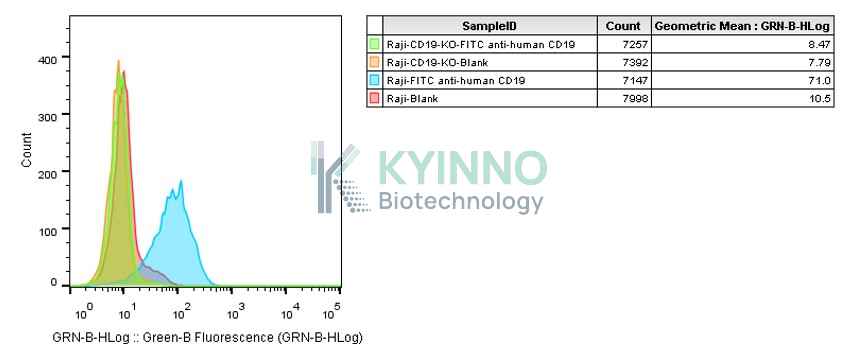
Figure 3: Characterization of Raji-CD19-KO-1B2 cell line stable clone using FACS.

Cell Resuscitation

  1. Prewarm culture medium (RPMI1640 + 10% FBS)in a 37°C water bath.
  2. Thaw the frozen vial in a 37°C water bath for 1-2 minutes.
  3. Transfer the vial into biosafety cabinet, and wipe the surface with 70% ethanol.
  4. Unscrew the top of the vial and transfer the cell suspension gently into a sterile centrifuge tube containing 9.0mL complete culture medium.
  5. Spin at ~ 125 × g for 5-7 minutes at room temperature, and discard the supernatant without disturbing the pellet.
  6. Resuspend cell pellet with the appropriate volume of complete medium and transfer the cell suspension into a T25 culture flask.
  7. Incubate the flask at 37°C, 5% CO2 incubator.
  8. Split saturated culture 1:5-1:10 every 2-3 days; seed out at about 1-3 × 10⁵ cells/mL.

Cell Freezing

  1. Prepare the freezing medium (70% RPMI-1640 + 20% FBS + 10% DMSO) fresh immediately before use.
  2. Keep the freezing medium on ice and label cryovials.
  3. Transfer cells to a sterile, conical centrifuge tube, and count the cells.
  4. Centrifuge the cells at 250×g for 5 minutes at room temperature and carefully aspirate off the medium.
  5. Resuspend the cells at a density of at least 3×10⁶ cells/mL in chilled freezing medium.
  6. Aliquot 1 mL of the cell suspension into each cryovial.
  7. Freeze cells in the CoolCell freezing container overnight in a -80°C freezer.
  8. Transfer vials to liquid nitrogen for long-term storage

References

  1. Carter RH, Fearon DT. CD19: lowering the threshold for antigen receptor stimulation of B lymphocytes. Science. 1992 Apr 3;256(5053):105-7. doi: 10.1126/science.1373518. PMID: 1373518. 2.https://www.ncbi.nlm.nih.gov/gene/930
Please enable JavaScript in your browser to complete this form.