Claudins, a family of at least 27 transmembrane proteins, are important components and functional structures of tight cell junctions. Claudin-18 is a major component of tight junctions located on the cell membrane surface; it plays an important role in the maintenance of cell polarity and barrier function and promotes acid resistance. The human CLDN18 gene locus on chromosome 3q22 has a molecular weight of approximately 35 kb and contains 6 exons and 5 introns. The first exon of CLDN18 can be alternatively spliced, forming two different splice mutants (CLDN18.1 and CLDN18.2) that have highly homologous amino acid sequences. Both the C-terminus and the N-terminus of CLDN 18 are located in the cytoplasm. Two CLDN18 protein isoforms are expressed in a tissue-specific manner—CLDN18.1 and CLDN18.2 are specifically expressed in normal stomach and lung tissues, respectively. CLDN18 is also expressed in cancer tissues and has altered functions that are linked to tumour formation, proliferation, invasion and migration.
Specifications
Catalog Number
KC-3775
Cell Line Name
Raji-CLDN18.2 Cell Line
Host Cell Line
Raji
Description
Stable Raji cell line expressing exogenous CLDN18.2 gene
Quantity
One vial of frozen cells (≥2-106/vial)
Stability
Stable in culture over a minimum of 10 passages
Application
Drug screening and biological assays
Freezing Medium
70% RPMI1640 + 20% FBS + 10% DMSO
Propagation Medium
RPMI1640 + 10% FBS + 2μg/ml Puromycin
Selection Marker
Puromycin
Morphology
Lymphoblast
Subculture
Split saturated culture 1:3-1:4 every 2-3 days; seed out at about 1-3 × 10⁵ cells/ml
Incubation
37 °C with 5% CO2
Storage
Liquid nitrogen immediately upon receiving
Doubling Time
Approximately 24 hours
Mycoplasma Status
Negative
In Vivo Validation
NA
Cell Line Generation
Raji CLDN18.2 Cell Line was generated using a lentiviral vector expressing the CLDN18.2 sequence.
Characterization
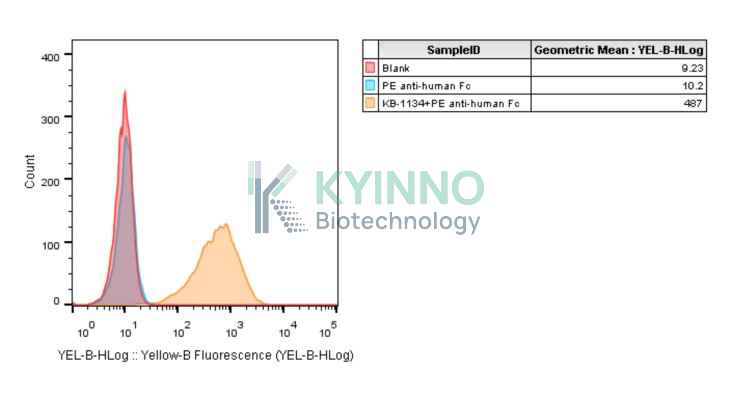
Figure 1: Characterization of CLDN18.2 overexpression in the Raji CLDN18.2 stable clone using FACS.
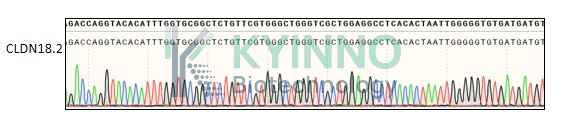
Figure 2: Characterization of CLDN18.2 in the Raji CLDN18.2 stable clone using PCR sequencing.
Cell Resuscitation
1. Prewarm culture medium (RPMI1640 supplemented with 10% FBS and 2μg/mL Puromycin)in a 37°C water bath.
2. Thaw the frozen vial in a 37°C water bath for 1-2 minutes.
3. Transfer the vial into biosafety cabinet, and wipe the surface with 70% ethanol.
4. Unscrew the top of the vial and transfer the cell suspension gently into a sterile centrifuge tube containing 9.0mL complete culture medium.
5. Spin at ~ 125 × g for 5-7 minutes at room temperature, and discard the supernatant without disturbing the pellet.
6. Resuspend cell pellet with the appropriate volume of complete medium and transfer the cell suspension into a T25 culture flask.
7. Incubate the flask at 37°C, 5% CO2 incubator.
8. Split saturated culture 1:3-1:4 every 2-3 days; seed out at about 1-3 × 10⁵ cells/mL.
Cell Freezing
1. Prepare the freezing medium (70% RPMI1640 + 20% FBS + 10% DMSO) fresh immediately before use.
2. Keep the freezing medium on ice and label cryovials.
3. Transfer cells to a sterile, conical centrifuge tube, and count the cells.
4. Centrifuge the cells at 250×g for 5 minutes at room temperature and carefully aspirate off the medium.
5. Resuspend the cells at a density of at least 3×10⁶ cells/mL in chilled freezing medium.
6. Aliquot 1 mL of the cell suspension into each cryovial.
7. Freeze cells in the CoolCell freezing container overnight in a -80°C freezer.
8. Transfer vials to liquid nitrogen for long-term storage.
References
1. Chen J, Xu Z, Hu C, Zhang S, Zi M, Yuan L, Cheng X. Targeting CLDN18.2 in cancers of the gastrointestinal tract: New drugs and new indications. Front Oncol. 2023 Mar 10;13:1132319.
2. Wang C, Wang Y, Chen J, Wang Y, Pang C, Liang C, Yuan L, Ma Y. CLDN18.2 expression and its impact on prognosis and the immune microenvironment in gastric cancer. BMC Gastroenterol. 2023 Aug 16;23(1):283.
Use License Agreement
Research Use Only.
Not for use in diagnostic procedures or therapeutic applications.
Redistribution of the cell line or its derivatives is prohibited without prior written permission from Kyinno Biotechnology.