KC-5309

Raji-LLT1 Cell Line

×
Please enable JavaScript in your browser to complete this form.
55654
Home » 细胞系 » Raji-LLT1 Cell Line

Background of Raji-LLT1 Cell Line

LLT1 aliase is CLEC2D. CLEC2D (C-Type Lectin Domain Family 2 Member D) is a Protein Coding gene. This gene encodes a member of the natural killer cell receptor C-type lectin family. The encoded protein inhibits osteoclast formation and contains a transmembrane domain near the N-terminus as well as the C-type lectin-like extracellular domain. Several alternatively spliced transcript variants have been identified for this gene.

Specifications

Catalog NumberKC-5309
Cell Line NameRaji-LLT1 Cell Line
Clone Number5#
Host Cell LineRaji
DescriptionRaji cell line stably expressing exogenous human LLT1 gene
QuantityTwo vials of frozen cells (≥2-106/vial)
StabilityStable in culture over a minimum of 10 passages
ApplicationDrug screening and biological assays
Freezing Medium70% RPMI1640 + 20% FBS + 10% DMSO
Propagation MediumRPMI1640 + 10% FBS + 2 μg/mL Puromycin
Selection MarkerPuromycin
Morphologylymphoblast
SubcultureSplit saturated culture 1:6-1:8 every 2-3 days; seed out at about 1-3 × 10⁵ cells/mL
Incubation37 °C with 5% CO2
StorageLiquid nitrogen immediately upon receiving
Doubling TimeApproximately 24 hours
Mycoplasma StatusNegative

Cell Line Generation

Raji-LLT1 cell line was generated using a lentiviral vector expressing the human LLT1 sequence

Characterization

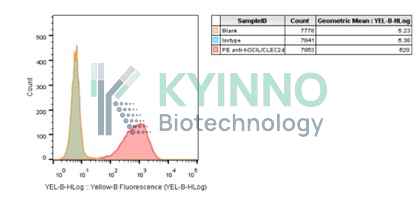
Figure1: Characterization of LLT1 overexpressing in Raji stable clones using FACS.

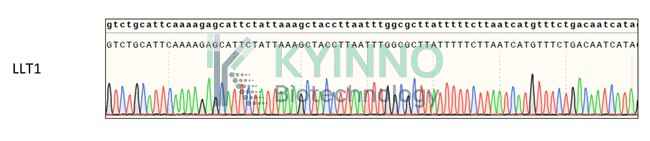
Figure2: Characterization of Raji-LLT1 cell line stable clone using PCR sequencing.

Cell Resuscitation

  1. Prewarm culture medium (RPMI1640 + 10% FBS + 2 μg/mL Puromycin) in a 37°C water bath.
  2. Thaw the frozen vial in a 37°C water bath for 1-2 minutes.
  3. Transfer the vial into biosafety cabinet, and wipe the surface with 70% ethanol.
  4. Unscrew the top of the vial and transfer the cell suspension gently into a sterile centrifuge tube containing 9.0mL complete culture medium.
  5. Spin at ~ 125 × g for 5-7 minutes at room temperature, and discard the supernatant without disturbing the pellet.
  6. Resuspend cell pellet with the appropriate volume of complete medium and transfer the cell suspension into a T25 culture flask.
  7. Incubate the flask at 37°C, 5% CO2 incubator.
  8. Split saturated culture 1:6-1:8 every 2-3 days; seed out at about 1-3 × 10⁵ cells/mL.

Cell Freezing

  1. Prepare the freezing medium (70% RPMI-1640 + 20% FBS + 10% DMSO) fresh immediately before use.
  2. Keep the freezing medium on ice and label cryovials.
  3. Transfer cells to a sterile, conical centrifuge tube, and count the cells.
  4. Centrifuge the cells at 250×g for 5 minutes at room temperature and carefully aspirate off the medium.
  5. Resuspend the cells at a density of at least 3×10⁶ cells/mL in chilled freezing medium.
  6. Aliquot 1 mL of the cell suspension into each cryovial.
  7. Freeze cells in the CoolCell freezing container overnight in a -80°C freezer.
  8. Transfer vials to liquid nitrogen for long-term storage.

References

  1. de Vicente JC, Lequerica-Fernández P, Rodrigo JP, Rodríguez-Santamarta T, Blanco-Lorenzo V, Prieto-Fernández L, Corte-Torres D, Vallina A, Domínguez-Iglesias F, Álvarez-Teijeiro S, García-Pedrero JM. Lectin-like Transcript-1 (LLT1) Expression in Oral Squamous Cell Carcinomas: Prognostic Significance and Relationship with the Tumor Immune Microenvironment. Int J Mol Sci. 2024 Apr 13;25(8):4314. doi: 10.3390/ijms25084314. PMID: 38673902; PMCID: PMC11050533.
  2. Boles KS, Barten R, Kumaresan PR, Trowsdale J, Mathew PA. Cloning of a new lectin-like receptor expressed on human NK cells. Immunogenetics. 1999 Oct;50(1-2):1-7. doi: 10.1007/s002510050679. PMID: 10541800.
Please enable JavaScript in your browser to complete this form.