KB-1730

RMP114-mIgG2a-D265A

×
Please enable JavaScript in your browser to complete this form.
56504
Home » Antibodies » RMP114-mIgG2a-D265A

Background of RMP114-mIgG2a-D265A

RMP114-mIgG1-D265A is a precision-engineered monoclonal antibody targeting murine PD-1, featuring a D265A mutation in the mIgG1 Fc region to enhance stability and minimize immunogenicity. This variant allows for specific PD-1 inhibition in preclinical models, minimizing off-target effects. Designed for research, RMP114-mIgG1-D265A offers high specificity and purity, suitable for a variety of applications including in vitro and in vivo studies. It serves as a versatile tool for unraveling PD-1 signaling in murine models, supporting the development of novel immunotherapies. In summary, RMP114-mIgG1-D265A provides researchers with a robust and low-immunogenicity alternative for studying PD-1 in immunology and oncology research.

Specifications

Catalog NumberKB-1730
Antibody NameRMP114-mIgG2a-D265A
IsotypeMouse IgG2a,kappa
TargetMouse PD1
Species ReactivityMouse
Host Cell LineEXPI CHO
Purification MethodAffinity purified
Concentration>2 mg/mL
Formulation50 mM sodium citrate,150mM NaCl,pH5.5
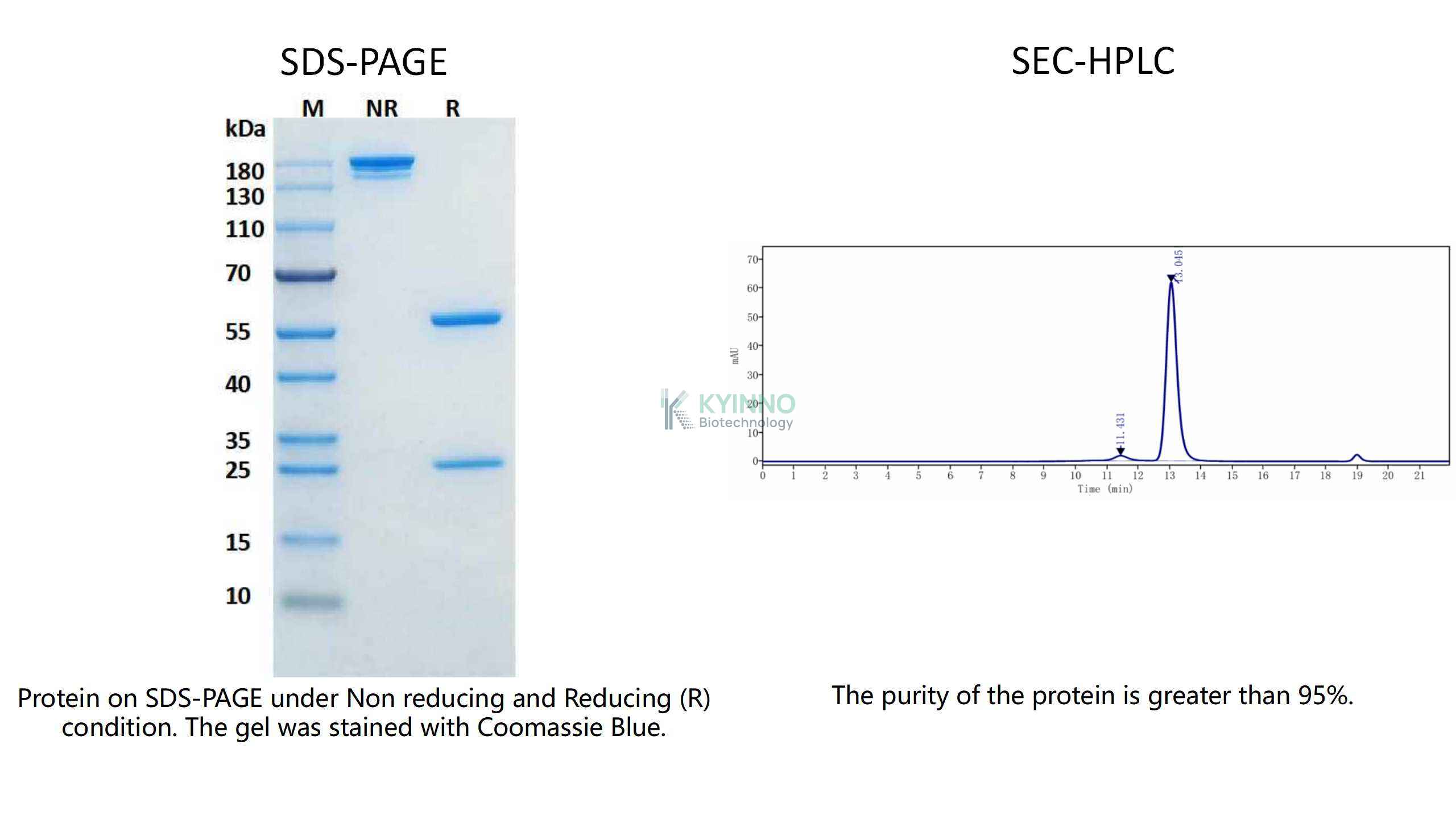
Purity>95% by SDS-PAGE and SEC-HPLC
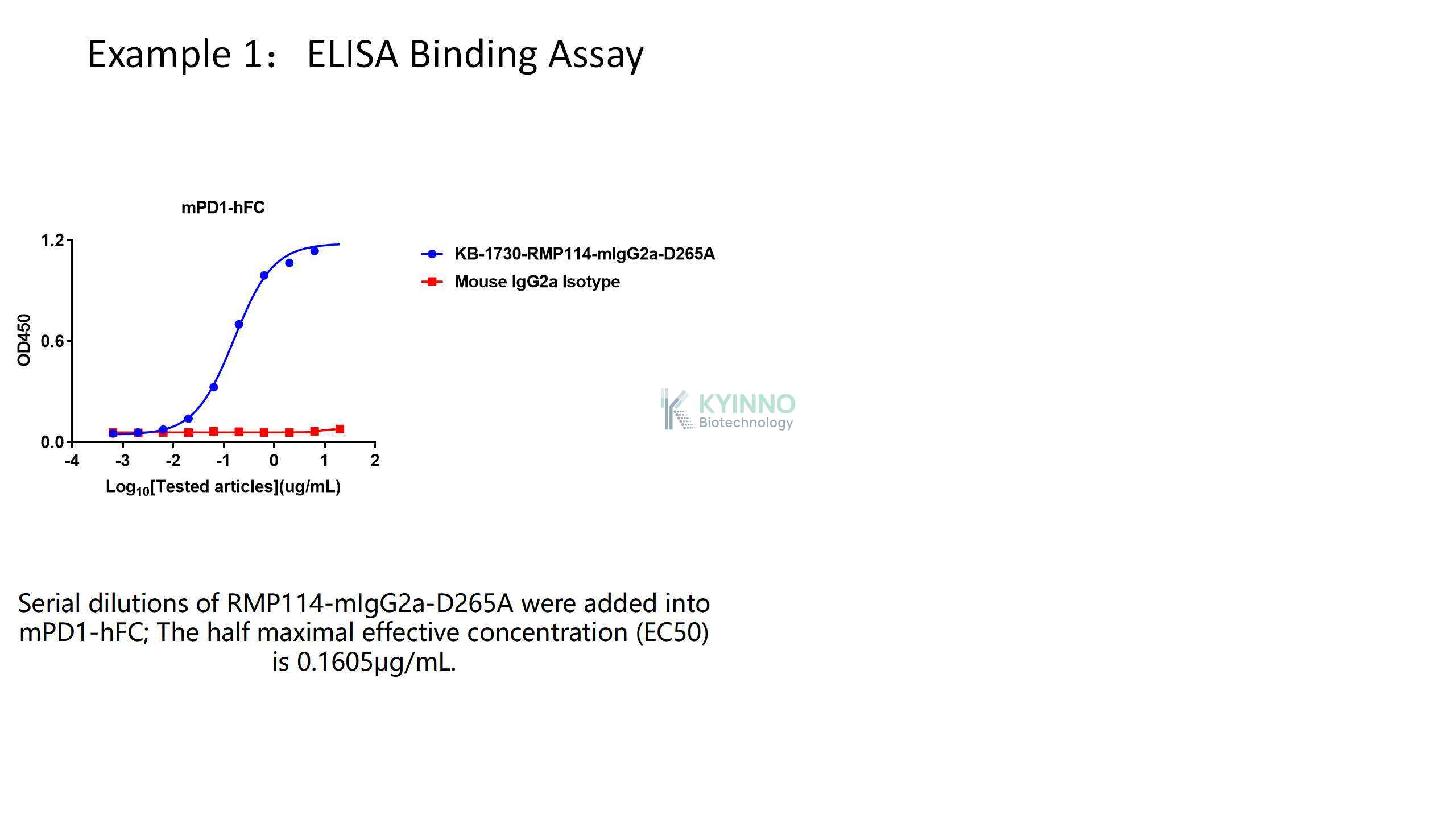
ValidationELISA
Endotoxin Level<0.2 EU/mg as determined by the LAL method
Sterility0.2μm filtered
StorageIt is recommended that the protein should be aliquoted for optimal storage.
Avoid repeated freeze-thaw cycles.
StabilityStable for twelve months from date of receipt when stored at -20°C to -80°C;
Stored at 2-8°C for one month without detectable loss of activity.

Characterization

Application

References

  1. Ribas A. & Wolchock J.D., 2018. Cancer immunotherapy using checkpoint blockade. Science. 359:1350-55.
  2. Yamazaki T. et al.,2005. Blockade of B7-H1 on macrophages suppresses CD4+ T cell proliferation by augmenting IFN-gamma-induced nitric oxide production. J Immunol. 175(3):1586-92.
  3. Brüggemann M. et al., 1989. The immunogenicity of chimeric antibodies. J. Exp. Med. 170:2153-2157.
  4. Mall C. et al., 2016. Repeated PD-1/PD-L1 monoclonal antibody administration induces fatal xenogeneic hypersensitivity reactions in a murine model of breast cancer. Oncoimmunology. 5(2):e1075114.
Please enable JavaScript in your browser to complete this form.