KC-4353

SHP77-DLL3-KO-2C3-Cell-Line

×
Please enable JavaScript in your browser to complete this form.
44841
Home » SHP77-DLL3-KO-2C3-Cell-Line

Background of SHP77-DLL3-KO-2C3-Cell-Line

The DLL3 (Delta-like 3) gene, located on chromosome 19p13.2, encodes a member of the delta-like family of Notch ligands. These ligands play critical roles in the Notch signaling pathway, which is essential for cell-to-cell communication and involved in various biological processes such as cell differentiation, proliferation, and apoptosis. The DLL3 protein is particularly important in the development of the nervous system, where it regulates neural stem cell fate and differentiation.Mutations or dysregulation of DLL3 have been implicated in several human diseases. For example, mutations in DLL3 are associated with spondylocostal dysostosis, a rare genetic disorder characterized by vertebral and rib anomalies. Additionally, overexpression of DLL3 has been observed in small cell lung cancer (SCLC), suggesting its potential role as a therapeutic target. Research into targeting DLL3 in SCLC has shown promising results, with some clinical trials already underway.

Specifications

Catalog NumberKC-4353
Cell Line NameSHP77-DLL3-KO-2C3-Cell-Line
Host Cell LineSHP77
DescriptionStable SHP77 clone with human DLL3 gene knockout, No.2C3
QuantityTwo vials of frozen cells (≥2-106/vial)
StabilityStable in culture over a minimum of 10 passages
ApplicationDrug screening and biological assays
Freezing MediumRPMI1640+20% FBS+10% DMSO
Propagation MediumRPMI1640+10% FBS
Selection MarkerN/A
Morphologyrounded
SubcultureSplit saturated culture 1:3-1:6 every 2-3 days; seed out at about 1-3 × 10⁵ cells/mL
Incubation37 °C with 5% CO2
StorageLiquid nitrogen immediately upon receiving
Doubling TimeApproximately 85 hours
Mycoplasma StatusNegative
In Vivo ValidationNA

Cell Line Generation

SHP77-DLL3-KO-2C3 cell line was generated using the CRISPR method.

Characterization

Figure 1: Characterization of SHP77-DLL3-KO-2C3 cell line stable clone using PCR sequencing.

Figure 2: Characterization of SHP77-DLL3-KO-2C3 cell line stable clone using RT-PCR sequencing.

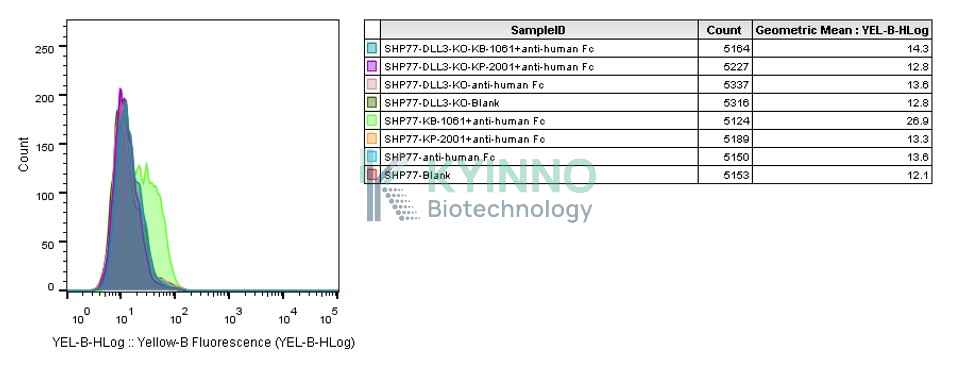
Figure 3: Characterization of SHP77-DLL3-KO-2C3 cell line stable clone using FACS.

Cell Resuscitation

  1. Prewarm culture medium (RPMI1640 + 10% FBS)in a 37°C water bath.
  2. Thaw the frozen vial in a 37°C water bath for 1-2 minutes.
  3. Transfer the vial into biosafety cabinet, and wipe the surface with 70% ethanol.
  4. Unscrew the top of the vial and transfer the cell suspension gently into a sterile centrifuge tube containing 9.0mL complete culture medium.
  5. Spin at ~ 125 × g for 5-7 minutes at room temperature, and discard the supernatant without disturbing the pellet.
  6. Resuspend cell pellet with the appropriate volume of complete medium and transfer the cell suspension into a T25 culture flask.
  7. Incubate the flask at 37°C, 5% CO2 incubator.
  8. Split saturated culture 1:3-1:6 every 2-3 days; seed out at about 1-3 × 10⁵ cells/mL.

Cell Freezing

  1. Prepare the freezing medium (70% RPMI-1640 + 20% FBS + 10% DMSO) fresh immediately before use.
  2. Keep the freezing medium on ice and label cryovials.
  3. Transfer cells to a sterile, conical centrifuge tube, and count the cells.
  4. Centrifuge the cells at 250×g for 5 minutes at room temperature and carefully aspirate off the medium.
  5. Resuspend the cells at a density of at least 3×10⁶ cells/mL in chilled freezing medium.
  6. Aliquot 1 mL of the cell suspension into each cryovial.
  7. Freeze cells in the CoolCell freezing container overnight in a -80°C freezer.
  8. Transfer vials to liquid nitrogen for long-term storage

References

  1. George, J., Lim, J., Jang, S. et al. Comprehensive genomic profiles of small cell lung cancer. Nature 524, 47–53 (2015).
    2.Saunders LR, Bankovich AJ, Anderson WC, Aujay MA, Bheddah S, Black K, Desai R, Escarpe PA, Hampl J, Laysang A, Liu D, Lopez-Molina J, Milton M, Park A, Pysz MA, Shao H, Slingerland B, Torgov M, Williams SA, Foord O, Howard P, Jassem J, Badzio A, Czapiewski P, Harpole DH, Dowlati A, Massion PP, Travis WD, Pietanza MC, Poirier JT, Rudin CM, Stull RA, Dylla SJ. A DLL3-targeted antibody-drug conjugate eradicates high-grade pulmonary neuroendocrine tumor-initiating cells in vivo. Sci Transl Med. 2015 Aug 26;7(302):302ra136. doi: 10.1126/scitranslmed.aac9459. PMID: 26311731; PMCID: PMC4934375.
    3.Krejci, P., et al. (2006). Analysis of mutations in patients with spondylocostal dysostosis demonstrates that the Notch pathway is increasingly important as a regulator of human development. Human Molecular Genetics, 15(14), 2207-2218.
    4.https://www.ncbi.nlm.nih.gov/gene/10683
Please enable JavaScript in your browser to complete this form.