KC-3847

TC1-E6-E7 Cell Line

×
Please enable JavaScript in your browser to complete this form.
34896
Home » TC1-E6-E7 Cell Line

Background of TC1-E6-E7 Cell Line

  1. E6 and E7, two major oncogene.Since E6 and E7 are the biomarkers of a cervical cancer cell and are the ones driving the cancer progression, therapeutic approaches targeting E6 and E7 have been proved to be highly efficient in terms of focused removal of abnormally propagating malignant cells. Human papillomavirus (HPV) is a class of envelope-free double-stranded DNA virus. HPV infection has been strongly associated with the development of many malignancies, such as cervical, anal and oral cancers. The viral oncoproteins E6 and E7 perform central roles on HPV-induced carcinogenic processes,HPV-E6 and E7 oncoproteins, considered as biomarkers usable in managing screen-positive women.

Specifications

Catalog NumberKC-3847
Cell Line NameTC1-E6-E7 Cell Line
Clone Number4#
Host Cell LineTC1
DescriptionStable TC1 cell line expressing exogenous E6-E7 gene
QuantityTwo vials of frozen cells (≥2-106/vial)
StabilityStable in culture over a minimum of 10 passages
ApplicationDrug screening and biological assays
Freezing Medium70% RPMI1640 + 20% FBS + 10% DMSO
Propagation MediumRPMI1640 + 10% FBS + 8μg/ml Puromycin
Selection MarkerPuromycin
MorphologyEpithelial
SubcultureSplit saturated culture 1:4-1:8 every 2-3 days; seed out at about 1-3 × 10⁵ cells/mL
Incubation37 °C with 5% CO2
StorageLiquid nitrogen immediately upon receiving
Doubling TimeApproximately 30 hours
Mycoplasma StatusNegative
In Vivo ValidationNA

Cell Line Generation

TC1-E6-E7 Cell Line was generated using a lentiviral vector expressing the E6-E7 sequence.

Characterization

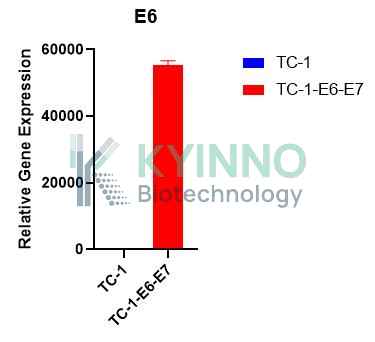
Figure 1: Characterization of E6 overexpression in the TC1-E6-E7 stable clone using qPCR.

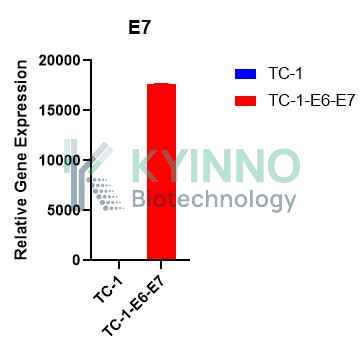
Figure 2: Characterization of E7 overexpression in the TC1-E6-E7 stable clone using qPCR.

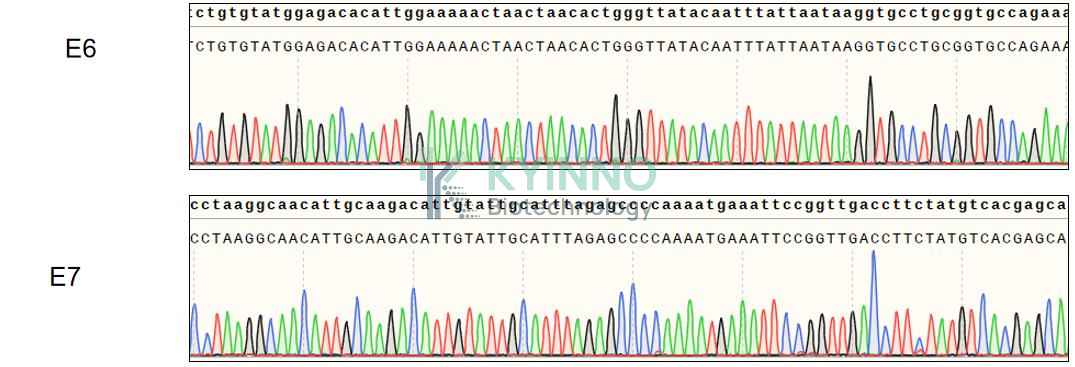
Figure 3: Characterization of E6-E7 overexpression in the TC1-E6-E7 stable clone using PCR.

Cell Resuscitation

  1. Prewarm culture medium (RPMI1640 supplemented with 10% FBS and 8μg/mL Puromycin)in a 37°C water bath.
  2. Thaw the frozen vial in a 37°C water bath for 1-2 minutes.
  3. Transfer the vial into biosafety cabinet, and wipe the surface with 70% ethanol.
  4. Unscrew the top of the vial and transfer the cell suspension gently into a sterile centrifuge tube containing 9.0mL complete culture medium.
  5. Spin at ~ 125 × g for 5-7 minutes at room temperature, and discard the supernatant without disturbing the pellet.
  6. Resuspend cell pellet with the appropriate volume of complete medium and transfer the cell suspension into a T25 culture flask.
  7. Incubate the flask at 37°C, 5% CO2 incubator.
  8. Split saturated culture 1:4-1:8 every 2-3 days; seed out at about 1-3 × 10⁵ cells/mL.

Cell Freezing

  1. Prepare the freezing medium (70% RPMI1640 + 20% FBS + 10% DMSO) fresh immediately before use.
  2. Keep the freezing medium on ice and label cryovials.
  3. Transfer cells to a sterile, conical centrifuge tube, and count the cells.
  4. Centrifuge the cells at 250×g for 5 minutes at room temperature and carefully aspirate off the medium.
  5. Resuspend the cells at a density of at least 3×10⁶ cells/mL in chilled freezing medium.
  6. Aliquot 1 mL of the cell suspension into each cryovial.
  7. Freeze cells in the CoolCell freezing container overnight in a -80°C freezer.
  8. Transfer vials to liquid nitrogen for long-term storage.

References

  1. Pal A, Kundu R. Human Papillomavirus E6 and E7: The Cervical Cancer Hallmarks and Targets for Therapy. Front Microbiol. 2020 Jan 21;10:3116.
  2. 2.Peng Q, Wang L, Zuo L, Gao S, Jiang X, Han Y, Lin J, Peng M, Wu N, Tang Y, Tian H, Zhou Y, Liao Q. HPV E6/E7: insights into their regulatory role and mechanism in signaling pathways in HPV-associated tumor. Cancer Gene Ther. 2024 Jan;31(1):9-17.
  3. 3.Downham L, Jaafar I, Rol ML, Nyawira Nyaga V, Valls J, Baena A, Zhang L, Gunter MJ, Arbyn M, Almonte M. Accuracy of HPV E6/E7 oncoprotein tests to detect high-grade cervical lesions: a systematic literature review and meta-analysis. Br J Cancer. 2024 Mar;130(4):517-525.
Please enable JavaScript in your browser to complete this form.