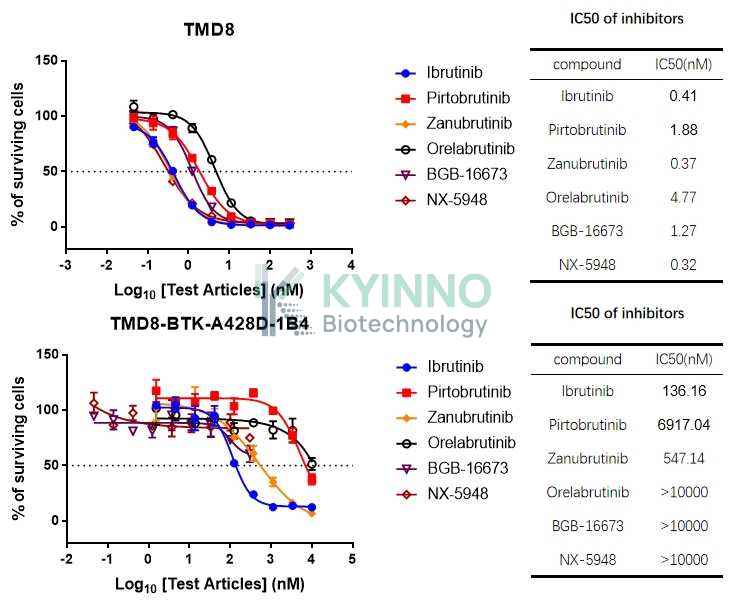
Bruton's tyrosine kinase (BTK) is a critical enzyme in the B-cell receptor (BCR) signaling pathway, playing a pivotal role in B-cell development, differentiation, and survival. BTK mutations have been implicated in various B-cell malignancies, including chronic lymphocytic leukemia (CLL), mantle cell lymphoma (MCL), and Waldenström's macroglobulinemia (WM). Among these mutations, BTK-A428D has emerged as a significant point mutation associated with resistance to covalent BTK inhibitors (BTKis), such as ibrutinib and acalabrutinib. This mutation occurs at the adenosine triphosphate (ATP)-binding site of BTK, leading to reduced binding affinity of these inhibitors and subsequent therapeutic resistance.The BTK-A428D mutation is characterized by the substitution of alanine with aspartic acid at position 428, a residue located in the kinase domain of BTK. This alteration disrupts the covalent binding of irreversible BTK inhibitors, which typically target the cysteine residue at position 481 (C481). As a result, the mutated BTK retains its kinase activity, allowing malignant B-cells to proliferate despite treatment. The emergence of BTK-A428D and other resistance mutations underscores the need for next-generation BTK inhibitors that can overcome these mechanisms of resistance.