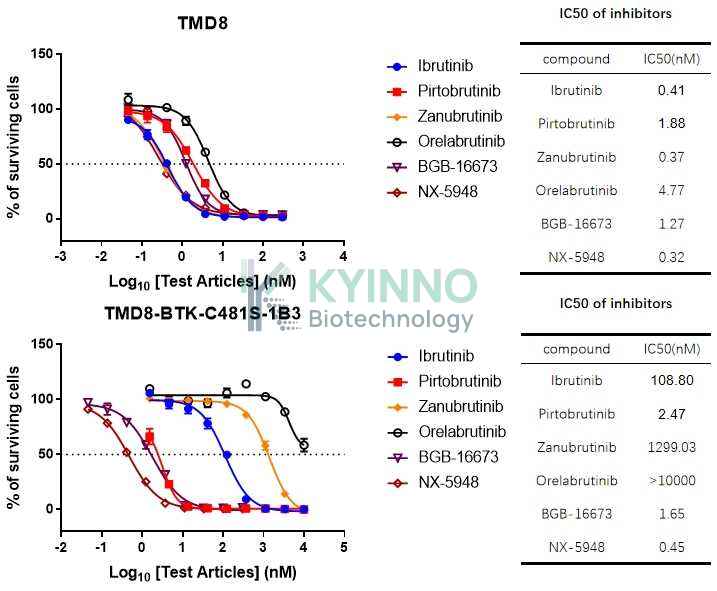
Bruton's tyrosine kinase (BTK) is a critical enzyme in the B-cell receptor (BCR) signaling pathway, playing a pivotal role in the development, differentiation, and survival of B-cells. Due to its central role in B-cell malignancies, BTK has become a key therapeutic target for the treatment of various B-cell lymphomas and autoimmune diseases.The BTK-C481S mutation arises from a point mutation in the BTK gene, where cysteine at position 481 is replaced by serine (C481S). This mutation occurs within the binding site of covalent BTK inhibitors, such as ibrutinib, which rely on forming a covalent bond with the cysteine residue to exert their inhibitory effects.In addition to its role in resistance, the BTK-C481S mutation has also provided valuable insights into the structural biology of BTK and its interaction with inhibitors. Structural studies have revealed how the C481S mutation alters the binding pocket of BTK, providing a rationale for the design of novel inhibitors that can circumvent resistance. These findings have not only advanced our understanding of BTK biology but also paved the way for the development of more effective therapeutic strategies.