KB-1225

Tusamitamab

×
Please enable JavaScript in your browser to complete this form.
52680
Home » Tusamitamab

Background of Tusamitamab

Carcinoembryonic antigen (CEA)-related cell adhesion molecule 5 (CEACAM5, also known as CD66e), a cell surface glycoprotein, is weakly expressed in normal epithelial tissues including colon, esophagus, head and neck, stomach, and cervix tissue but is highly expressed in several tumor types including gastrointestinal, lung, and breast. Tusamitamab ravtansine (SAR408701) is an antibody-drug conjugate composed of a humanized monoclonal antibody that binds carcinoembryonic antigen-related cell adhesion molecule-5 (CEACAM5) and a cytotoxic maytansinoid that selectively targets CEACAM5-expressing tumor cells.

Specifications

Catalog NumberKB-1225
Antibody NameTusamitamab
IsotypeHuman IgG1,kappa
FC MuationsWild Type
TargetCEACAM5
Species ReactivityHuman
Host Cell LineEXPI CHO
Purification MethodAffinity purified
Concentration>2 mg/mL
Formulation50 mM sodium citrate,150mM NaCl,pH5.5
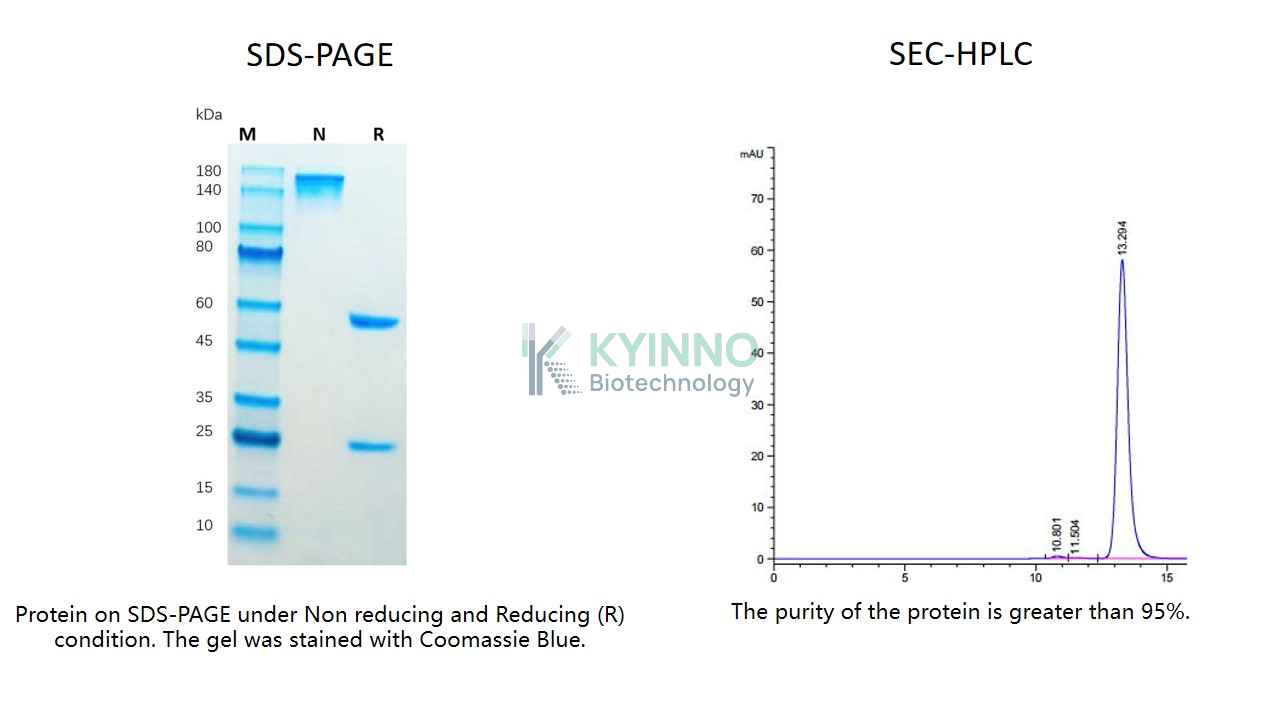
Purity>95% by SDS-PAGE and SEC-HPLC
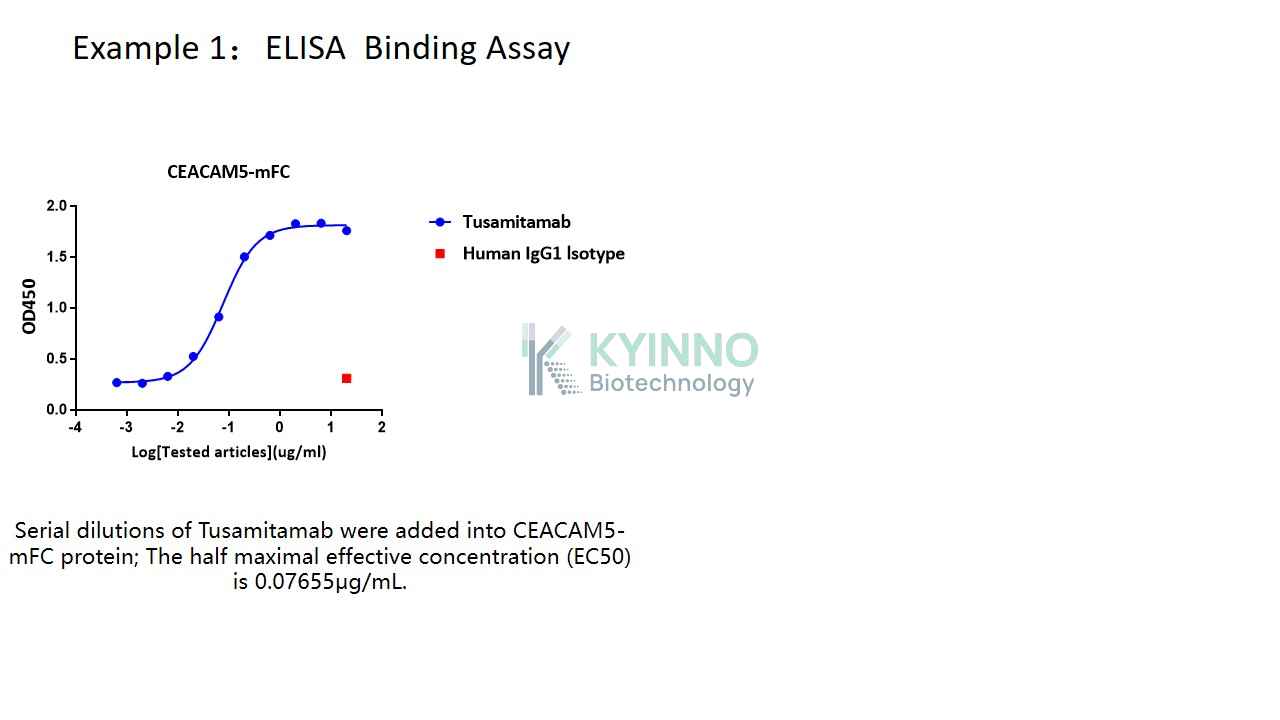
ValidationELISA
Endotoxin Level<0.2 EU/mg as determined by the LAL method
Sterility0.2μm filtered
StorageIt is recommended that the protein should be aliquoted for optimal storage.
Avoid repeated freeze-thaw cycles.
StabilityStable for twelve months from date of receipt when stored at -20°C to -80°C;
Stored at 2-8°C for one month without detectable loss of activity.

Characterization

Application

References

  1. S. Decary, P.-F. Berne, C. Nicolazzi, et al. Preclinical activity of SAR408701: a novel anti-CEACAM5-maytansinoid antibody-drug conjugate for the treatment of CEACAM5-positive epithelial tumors. Clin Cancer Res, 26 (2020), pp. 6589-6599.
  2. S. Hammarstrom. The carcinoembryonic antigen (CEA) family: structures, suggested functions and expression in normal and malignant tissues. Semin Cancer Biol, 9 (1999), pp. 67-81.
Please enable JavaScript in your browser to complete this form.